
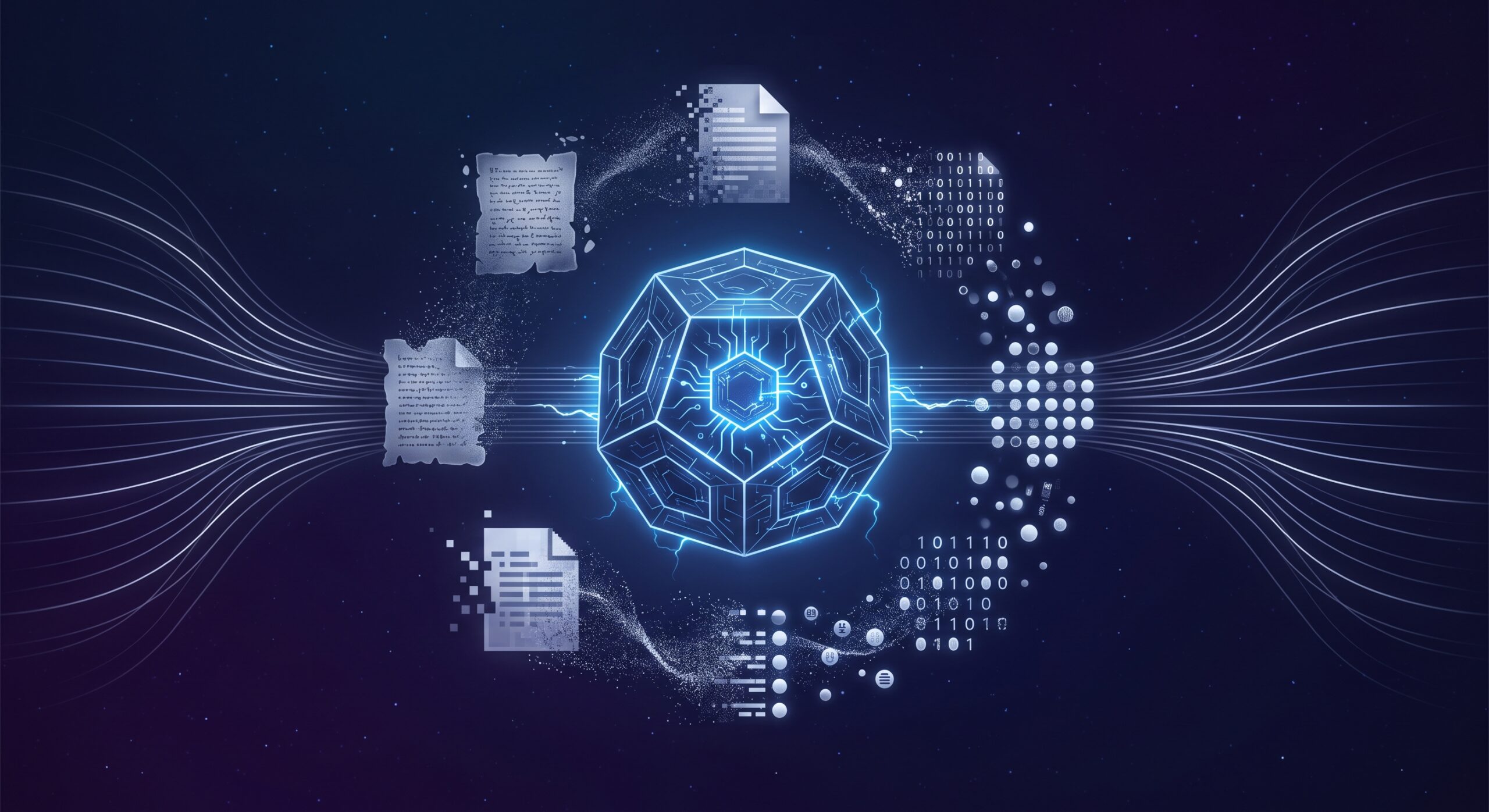
The universe of data is vast and ever-expanding, much like the cosmos we aim to explore. At Explore the Cosmos, we believe that understanding this data is the key to unlocking new discoveries, whether in the realm of space science, personal finance, or human performance. Yet, a significant portion of this valuable information remains locked away, hidden within the unstructured format of documents. This is where the power of Optical Character Recognition (OCR) and advanced Document Understanding comes into play, transforming static pages into actionable intelligence.
In today’s data-driven world, the ability to efficiently process and interpret information from diverse sources is paramount. We’ve seen firsthand how manual data entry and interpretation can be a bottleneck, leading to errors, delays, and missed opportunities. This is precisely why we champion tools and techniques that demystify complex processes and empower users with data sovereignty. Our work with local-first software, like FinFortress, underscores our commitment to keeping your data private and under your control. Now, let’s delve into how the evolution of OCR and Document Understanding aligns with this mission and what we can expect in the coming years.
The Evolution from Basic OCR to Intelligent Document Understanding
For decades, OCR has been the cornerstone of digitizing paper documents. Its primary function was to convert images of text into machine-readable code. Think of it as a digital translator, taking the visual representation of letters and turning them into characters your computer can process. However, traditional OCR often struggled with complex layouts, varied fonts, and lower-quality scans, leading to significant error rates and requiring substantial manual correction. This “pixel to character” translation was a crucial first step, but it fell short of true understanding.
The real revolution began when Artificial Intelligence (AI), particularly Machine Learning (ML) and Natural Language Processing (NLP), was integrated into the OCR process. This marked the shift from basic Optical Character Recognition to what we now call Intelligent Document Processing (IDP). Modern IDP systems don’t just read characters; they understand context, structure, and even the intent behind the text.
By 2026, the landscape of document processing has dramatically transformed. We’re moving beyond rigid templates and basic extraction to a more sophisticated, context-aware interpretation of both structured and unstructured data. AI algorithms can now read, understand, and extract critical data with remarkable accuracy, even from documents with unfamiliar fonts, varying sizes, and unusual layouts. This leap in capability is crucial for any organization aiming to harness the full potential of their data.
Key Trends Shaping OCR and Document Understanding in 2026
The advancements in AI have propelled OCR and Document Understanding into an exciting new era. As we look towards 2026, several key trends are defining this evolution:
1. From Extraction to Autonomous Action: Agentic Workflows
Perhaps the most significant shift we’re observing is the move from simple data extraction to autonomous action. For years, the promise of IDP was to extract data efficiently, often presenting it in formats like CSV files that still required human intervention. However, by 2026, the demand is for “Agentic IDP.” This means AI systems that can not only read a document but also understand its implications and autonomously take the next logical step.
Imagine an invoice arriving: an agentic system could read it, query your ERP system to find the corresponding Purchase Order, compare line items semantically, identify any discrepancies, and even initiate payment or flag an exception for review – all without human input for standard processes. This represents a move from basic automation to intelligent decision-making, aligning perfectly with our mission of empowering users with data-driven insights and efficient workflows. For users of FinFortress, this could translate to automated categorization of bank statements with an unprecedented level of contextual understanding.
2. Industry-Specific Solutions and Regulatory Acumen
The era of one-size-fits-all IDP is fading. By 2026, the market is increasingly favoring industry-specific solutions. Documents are not just text; they are shaped by regulations, accounting rules, legal boundaries, and physical events. Healthcare organizations, for instance, have distinct needs for traceability and data residency, while financial services demand auditability and robust compliance reporting.
This specialization is driven by the increasing complexity of regulatory frameworks globally. Systems must understand not only the content of documents but also the rules governing their storage, processing, and actionability. For us at Explore the Cosmos, this means that as we explore the “cosmos” of data, our tools will need to be adaptable and aware of the specific data governance requirements relevant to different domains.
3. The Rise of Multimodal AI and Deep OCR
Modern OCR is becoming increasingly sophisticated, moving beyond mere text recognition. Deep OCR, for example, uses deep learning and neural networks to achieve higher accuracy, even with challenging inputs like unfamiliar fonts or unusual layouts. Even more significantly, multimodal AI models can now process and understand not just text, but also images, tables, and layout simultaneously.
This “layout awareness” is critical. It means systems can understand the spatial context of information – recognizing headings, paragraphs, tables, and form fields as distinct structural elements rather than just a flat stream of text. For a tool like our Apple Health Cycling Analyzer, this could mean more nuanced interpretation of complex data visualizations and reports, extracting richer insights from visual elements within documents.
4. Predictive AI and Proactive Automation
The future of document automation in 2026 is not just about processing existing documents, but also about anticipating future needs. Predictive AI is enabling systems to forecast when updates, renewals, or new documentation will be required. For instance, supplier contracts nearing expiration can be flagged early, or compliance documents can be updated proactively before regulations change.
This proactive approach is a significant leap forward, eliminating common pain points and ensuring continuous compliance and operational readiness. For our users focused on financial independence through FIRE principles, this could mean proactive alerts for investment renewals or tax document preparation, streamlining their wealth management.
5. Trust, Governance, and Explainability
As AI systems become more integral to workflows and decision-making, trust, governance, and explainability are becoming paramount. The days of “black box” AI are waning; organizations need to understand how decisions are made and ensure fairness, security, and compliance.
By 2026, robust data security and privacy will be core capabilities, with AI-powered features monitoring documents and workflows in real-time for regulatory adherence. For us at Explore the Cosmos, this principle is non-negotiable. Our commitment to privacy-first tools means that any advancements in document understanding must uphold the same stringent standards. We believe in transparency and control, ensuring that users understand how their data is processed, even when automated.
OCR and Document Understanding in the Context of Explore the Cosmos
Our mission at Explore the Cosmos is to democratize complex data analysis through clear explanations and practical, privacy-centric tools. OCR and Document Understanding are powerful enablers of this mission across all our content pillars:
* Data Science & Machine Learning: Just as we demystify ML concepts, advanced OCR helps demystify the data locked within documents. Understanding text classification, for example, is fundamental to how systems like FinFortress auto-categorize bank statements. This evolution allows for more accurate and context-aware classification, moving beyond simple keyword matching to true semantic understanding. Our work in building local classifiers, like the LinearSVC used in FinFortress, benefits from increasingly sophisticated ways to pre-process and understand textual data from various sources.
* Personal Finance, FIRE & Data Sovereignty: For those tracking financial independence, documents like bank statements, investment portfolios, and tax forms are critical. Advanced IDP can automate the extraction and categorization of this data, feeding directly into visualization tools like Sankey diagrams and Wealth Waterfalls. This significantly reduces the manual effort required for budgeting and wealth tracking, reinforcing our commitment to data sovereignty by minimizing reliance on cloud-based financial aggregators and enabling more robust local-first financial dashboards.
* Cycling Performance Analysis: While our Apple Health Cycling Analyzer focuses on structured health data, many cyclists also rely on written reports, training logs, or even scanned historical data. The ability of IDP to intelligently extract key metrics, identify trends, and even summarize long training reports could enhance the insights derived from an athlete’s complete data ecosystem, all while respecting the local-first, privacy-conscious approach we advocate.
The Future is Intelligent and Private
The trajectory of OCR and Document Understanding is clear: it’s becoming more intelligent, more integrated, and more essential for extracting value from the ever-growing ocean of data. By 2026, these technologies are poised to move beyond simple digitization, offering sophisticated understanding, proactive insights, and autonomous workflows.
At Explore the Cosmos, we are excited by these developments. They align perfectly with our core values of data-driven discovery, clear explanation, and unwavering commitment to user privacy and data sovereignty. As we continue to build and refine our tools and educational content, we will always prioritize solutions that empower our users to understand their data, control their information, and explore the vast cosmos of knowledge with confidence. The journey from raw pixels on a page to profound insight is accelerating, and we’re here to guide you through it, one data point at a time.
Leave a Reply