
Imagine you’re training for a marathon. You wouldn’t just run the same course every single day, would you? Doing so might make you incredibly fast on *that specific route*, but what happens when race day brings a new, unfamiliar terrain? You’d likely falter. In the world of data science and machine learning, this scenario is all too common if we don’t properly understand the critical difference between training and test sets.
At Explore the Cosmos, our mission is to demystify complex topics like data science and machine learning through clear explanations and practical applications. Whether you’re analyzing your cycling performance with our Apple Health Cycling Analyzer or delving into the intricacies of AI, understanding how models learn and how we verify their learning is fundamental. This is where the concepts of training and test sets become not just important, but absolutely vital.
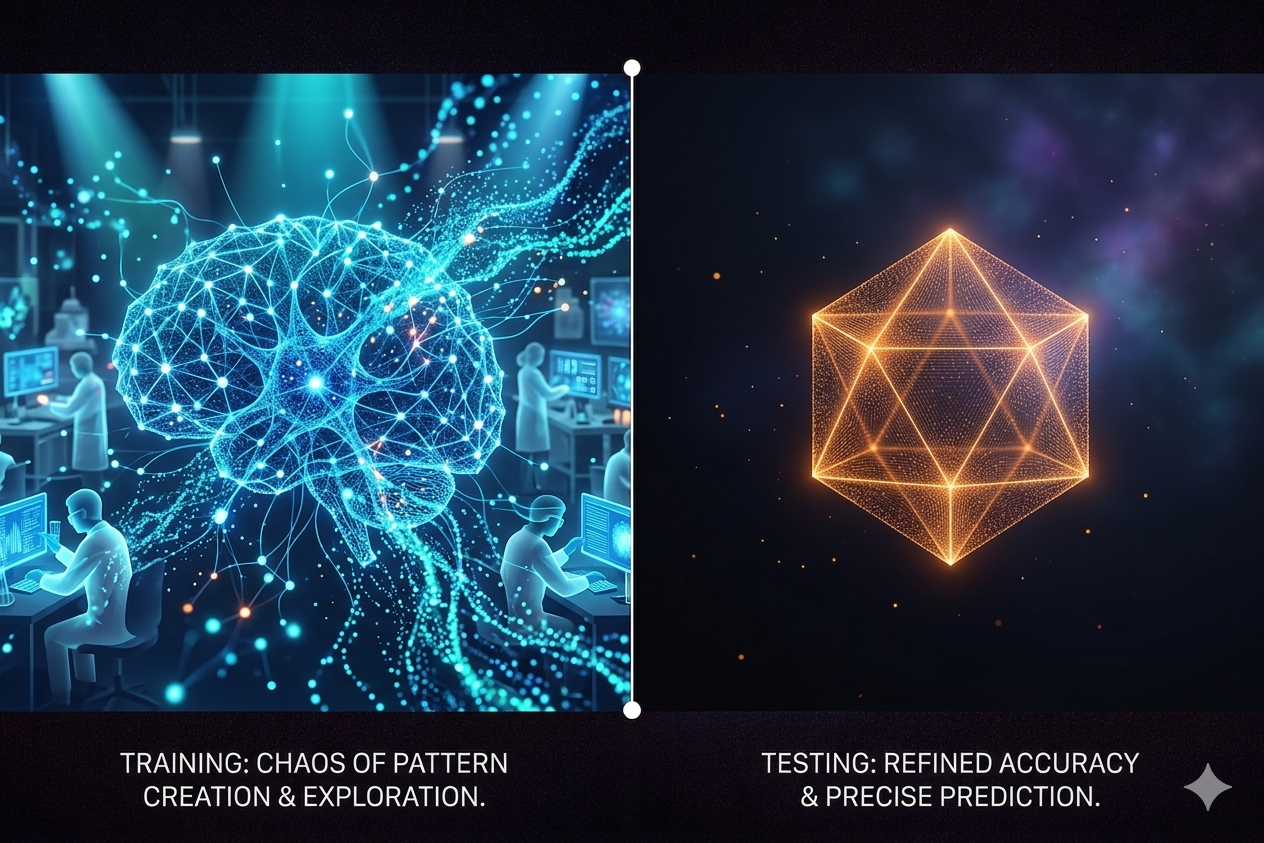
What Exactly Are Training and Test Sets?
At its core, machine learning is about teaching a computer to recognize patterns in data so it can make predictions or decisions about new, unseen data. To achieve this, we need to divide our available data into distinct groups:
The Training Set: The Learning Ground
This is the largest portion of our data, the “textbook” for our machine learning model. We feed the training set to the algorithm, allowing it to learn the underlying patterns, relationships, and features within the data. Think of it as showing a student countless examples of a particular concept. For instance, if we’re building a model to predict cycling performance metrics like VAM (Vertical Ascent/Minute), the training set would contain historical ride data – including factors like elevation gain, distance, duration, heart rate, and power output – paired with the resulting VAM. The model analyzes these examples to understand how these inputs typically lead to a certain VAM output. This phase is all about exploration and pattern discovery. We want the model to be exposed to a wide variety of scenarios within the training data to build a robust understanding.
The Test Set: The Final Exam
Once the model has “learned” from the training data, we need to evaluate how well it has actually grasped the concepts. This is where the test set comes in. The test set is a separate, unseen portion of the data that the model has never encountered during its training. It acts as a “final exam” to gauge the model’s ability to generalize its learning to new situations. We present the test set to the trained model and compare its predictions against the actual outcomes. This allows us to measure its accuracy and identify potential weaknesses. Crucially, the test set must be representative of the kind of data the model will encounter in the real world.
Why This Divide Matters: The Peril of Overfitting
The distinction between training and test sets is paramount because it directly addresses one of the most significant challenges in machine learning: overfitting. Overfitting occurs when a model learns the training data too well, including its noise and specific idiosyncrasies, rather than the underlying general patterns. This leads to a model that performs exceptionally well on the training data but fails miserably when presented with new, unseen data.
Imagine our marathon runner who only ever trains on one flat, paved road. They might achieve an incredibly fast time on that specific road (perfectly “trained” for it). However, if the actual marathon course includes hills, gravel, and uneven terrain, their performance will suffer dramatically. They’ve overfit to the training conditions.
In a 2026 research paper, scientists highlighted the increasing complexity of AI models and the subsequent rise in overfitting challenges, especially in dynamic environments like real-time performance analysis. The study emphasized that robust validation using distinct test sets is more critical than ever to ensure models remain reliable and performant in real-world, evolving conditions.
Similarly, a machine learning model that has overfit to its training data might accurately predict VAM for rides very similar to those it saw during training. But, if presented with data from a rider using a new type of equipment, or in vastly different weather conditions, its predictions could be wildly inaccurate. This is why a separate test set is non-negotiable. It provides an unbiased assessment of the model’s true predictive power.
Recent Trends and Data (2026): The Evolving Landscape
As machine learning continues its rapid integration into various fields, including sports science and complex systems analysis, the nuances of data splitting are receiving renewed attention. Here are some key trends shaping our understanding in 2026:
1. Dynamic Data Splitting and Continuous Validation
In applications where data distributions can shift over time (like rider performance influenced by new training protocols or environmental factors), a static train-test split is becoming insufficient. Recent research from 2026 points to the growing adoption of dynamic data splitting strategies. This involves periodically retraining models with newer data and using continuously updated test sets to monitor performance drift. For example, our Apple Health Cycling Analyzer, while privacy-first and browser-based, could conceptually benefit from such an approach if it were to incorporate predictive models. By regularly “re-testing” the model’s understanding against recent, unseen ride data, we can ensure its insights remain relevant and accurate over time.
2. Explainable AI (XAI) and Test Set Integrity
With the increasing demand for transparency in AI, especially in high-stakes applications, the integrity of the test set is paramount for validating explainable AI (XAI) findings. A 2026 industry report indicated that trust in AI explanations hinges heavily on their performance on rigorously validated, unseen data. If a model’s explanations (e.g., why a certain training load is recommended) are only validated against the data it was trained on, those explanations might be superficial or misleading. A robust test set ensures that the patterns and relationships the XAI highlights are genuinely predictive and not just artifacts of the training data.
3. Hyperparameter Tuning and the “Validation Set” Nuance
While the core distinction is between training and testing, many practitioners now also use a “validation set.” This is a third dataset, separate from both training and test sets. The validation set is used during the model development phase to tune hyperparameters – settings that control the learning process itself (like the learning rate or the number of layers in a neural network). Tuning directly on the test set would contaminate its results, making it no longer an unbiased measure of performance. In 2026, best practices increasingly advocate for this three-way split (train, validation, test) to ensure rigorous model development and evaluation. This is particularly relevant when developing sophisticated algorithms for analyzing complex systems, like those we explore at Explore the Cosmos.
Practical Implications for Our Users
So, what does this mean for you, whether you’re a cyclist fine-tuning your training or someone curious about data science?
- For Cyclists Using Performance Tools: When you use tools that analyze your data, understand that their insights are based on models trained on vast amounts of past data. The effectiveness of these insights hinges on how well those models generalize. If a tool seems to give generic advice or performs poorly on your unique riding style, it might be an indicator of poor model training or overfitting. Our commitment at Explore the Cosmos is to provide clear, data-driven insights, and understanding this concept helps you critically evaluate any tool you use.
- For Data Science Enthusiasts: When you embark on your own data science projects, always prioritize a proper data split. Never “peek” at your test set during training or hyperparameter tuning. Treat it as sacred ground for the final evaluation. This discipline is what separates a model that merely memorizes from one that truly understands.
- Understanding Complex Systems: Whether it’s predicting the efficiency of a rocket engine or forecasting human performance under stress, the principles are the same. A model that hasn’t been rigorously tested on unseen data is like a spaceship that hasn’t undergone its final flight simulations – it might look good on paper, but its readiness for the real mission is uncertain.
Conclusion: The Foundation of Trustworthy Insights
The division between training and test sets is more than just a technical detail; it’s the bedrock upon which reliable machine learning models are built. It’s the safeguard against misleading conclusions and the key to ensuring that the patterns our models discover are genuinely reflective of the real world, not just artifacts of the data we fed them. At Explore the Cosmos, we believe in empowering our audience with this foundational knowledge, enabling you to approach data science, machine learning, and performance analysis with confidence and a deeper understanding of the “why” behind the numbers. This rigorous approach to data evaluation is fundamental to our mission of Science. Data. Discovery.
Leave a Reply