
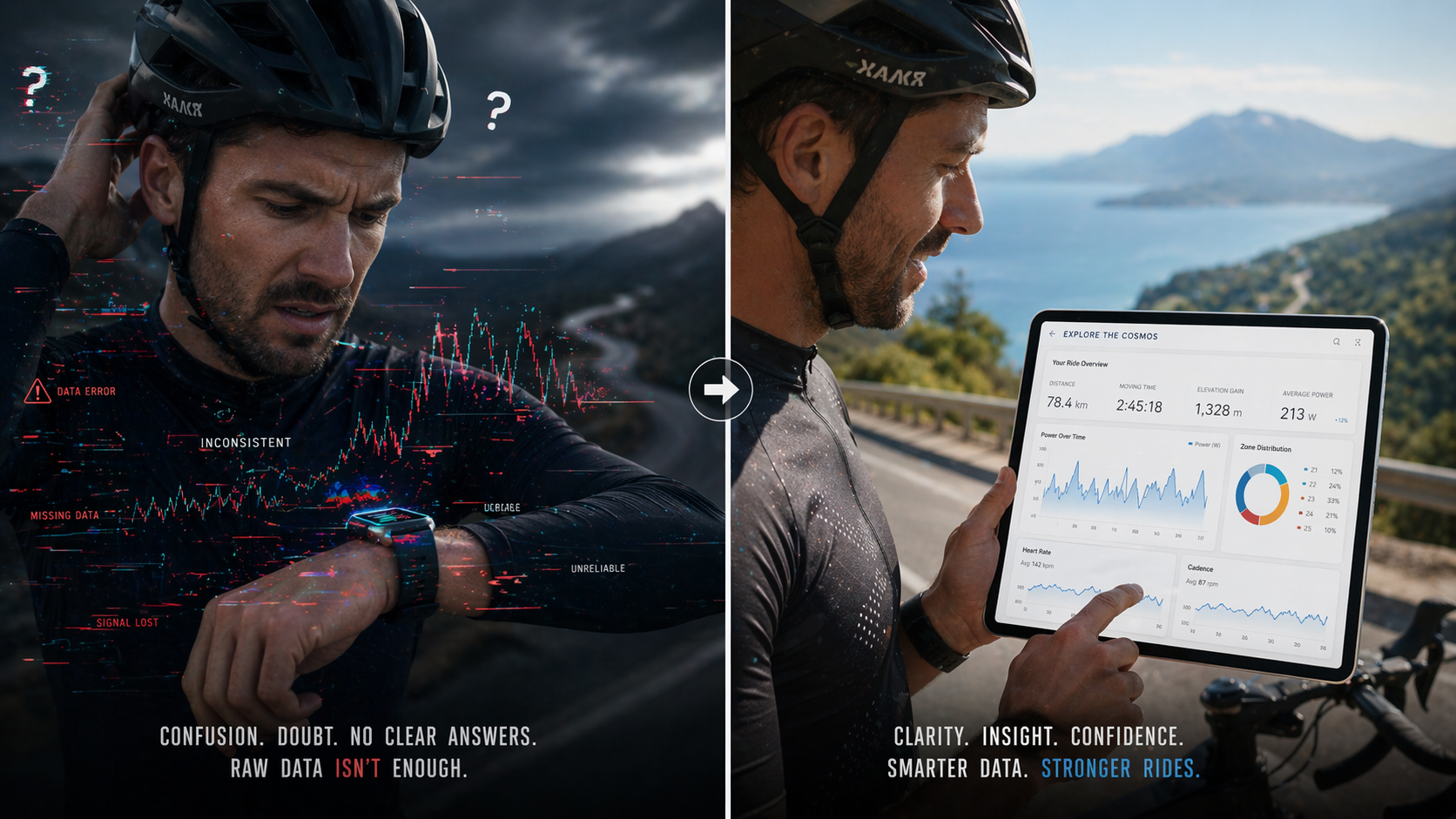
As cyclists and data enthusiasts, we at Explore the Cosmos thrive on discovery. We believe in the power of science and data to illuminate complex systems, from the vastness of space to the intricacies of human performance. Our mission is to empower you with the knowledge to understand these systems, whether it’s through dissecting machine learning algorithms or interpreting the data from your latest ride. However, with the explosion of wearable technology and the sheer volume of metrics available to us, it’s crucial to approach these numbers with a discerning eye. Today, we’re diving deep into a common pitfall: misleading fitness metrics. By understanding what these numbers truly represent – and what they don’t – we can unlock more meaningful insights and optimize our training more effectively.
The Allure of the Numbers: Why We Trust Our Devices
The rise of wearable technology has been nothing short of revolutionary. Devices like smartwatches and fitness trackers have become ubiquitous, promising to unlock our potential by quantifying our every move. In 2026, this trend continues its upward trajectory, with wearables evolving beyond basic step counting to offer increasingly sophisticated health monitoring. We’re seeing the integration of advanced biosensors capable of tracking metrics like blood pressure, blood glucose, skin temperature, and even sleep apnea risk. This evolution is driven by consumer demand for more “personalized health intelligence” and a desire to understand our bodies on a deeper level. For cyclists, this translates into a wealth of data: heart rate, power output, cadence, speed, VAM, and a host of derived metrics like efficiency factor and HR drift, which our Apple Health Cycling Analyzer helps you process. The allure is undeniable; these devices offer us a seemingly objective mirror to our performance and our health.
However, this reliance on data, while powerful, also presents a significant challenge. As we delve deeper into the world of fitness tracking, we must confront the reality that not all data is created equal, and not all metrics tell the full story. The drive for innovation in wearables means new technologies are constantly emerging, often outpacing rigorous validation. This can lead to a situation where we’re presented with numbers that, while seemingly precise, may not accurately reflect our physiological state or performance potential. This is where our commitment to data-driven analysis and clear explanation becomes paramount. We aim to cut through the noise, helping you understand not just what a metric is, but what it truly means for you.
2026: A Year of Advanced Metrics and Emerging Caveats
As we navigate 2026, the landscape of fitness metrics is more complex and sophisticated than ever. Wearable technology is increasingly integrated with AI and machine learning, offering predictive insights into health, recovery, and performance. Devices are moving towards “clinical-grade” monitoring, with some even receiving FDA clearances for features like atrial fibrillation detection and irregular heart rhythm alerts. This advancement means that the data we collect is more detailed, and the potential applications are broader. For instance, AI-driven coaching is now capable of generating personalized strain recommendations based on recovery states, moving beyond generic advice like “get 10,000 steps”. We’re also seeing a rise in metrics related to nervous system regulation, with an emphasis on how quickly heart rate returns to baseline, suggesting a shift towards “nervous system hygiene”.
However, with this surge in sophisticated metrics comes an increased potential for misinterpretation. While AI can offer powerful insights, these are only as good as the data they’re fed and the algorithms that process it. A key trend in 2026 is the tension between technological innovation and user trust, with accuracy, battery life, and data privacy being central to this dynamic. For cyclists, this means that while advanced metrics might promise deeper insights, they also introduce new layers of complexity. For example, what appears as a “poor recovery score” from a wearable might be a misinterpretation of your body’s unique response to training, or an artifact of sensor inaccuracy. As stated in the ACSM’s 2026 trends, while wearable technology is a powerful tool, “some metrics may be experimental or unreliable”. This highlights our role at Explore the Cosmos: to help you differentiate between scientifically validated insights and mere data noise.
Case Study: The Elusive Efficiency Factor
Let’s consider a metric common in cycling analysis: the “Efficiency Factor.” This metric attempts to quantify how effectively you convert power output into forward motion, often calculated by dividing speed by heart rate, or a similar proxy. On the surface, it seems incredibly useful. A higher efficiency factor suggests you’re getting more “bang for your buck” physiologically – working less hard for the same speed. Many cyclists strive to improve this number, viewing it as a direct indicator of improved fitness or technique.
However, like many derived metrics, the efficiency factor can be highly misleading. Here’s why:
- Environmental Factors: Wind is the most significant external variable. Riding into a headwind will drastically reduce your speed for the same power and heart rate, plummeting your efficiency factor. Conversely, a tailwind will artificially inflate it. Hills play a similar role; climbing requires more power and elevates heart rate, while descending might see high speed with lower effort, skewing the metric.
- Physiological Variability: Heart rate is influenced by numerous factors beyond exertion. Stress, dehydration, fatigue, caffeine, heat, and even the time of day can all affect your heart rate independently of your power output. This means a lower efficiency factor on a given day might not reflect a decrease in your true physiological efficiency, but simply a higher heart rate due to external or internal stressors.
- Technique and Pacing: While efficiency can improve with better bike handling and pacing, the metric itself doesn’t distinguish between true physiological efficiency and simply drafting effectively or holding a more aerodynamic position.
- Sensor Accuracy: The accuracy of the power meter and heart rate monitor are foundational. Inconsistent readings from either device will directly impact the calculated efficiency factor, rendering it unreliable.
At Explore the Cosmos, we acknowledge the limitations of such metrics. Our Apple Health Cycling Analyzer, while processing a wealth of data, prioritizes providing clear insights into fundamental metrics like VAM (Vertical Ascent Meters), HR drift, and genuine fitness assessments. We encourage users to use derived metrics like efficiency factor with extreme caution, understanding the multitude of variables that can influence them. Instead of chasing a single number, we advocate for a holistic approach, looking at trends over time and considering the context of each ride.
Beyond the Numbers: The Importance of Context and Fundamentals
The advancements in wearable technology and AI are remarkable, but they are tools, not oracles. The most crucial element in interpreting any fitness metric is context. In 2026, as wearable technology becomes even more sophisticated, the ability to translate raw data into actionable insights remains paramount. This requires us to understand the underlying physiological principles and the practical realities of our training. For cyclists, this means appreciating that a single metric, isolated from the conditions of the ride, can paint an inaccurate picture.
Emerging trends in fitness for 2026 highlight this shift towards a more nuanced understanding. There’s a growing emphasis on “longevity” and “healthspan” over purely aesthetic or performance-driven metrics. This includes a focus on recovery, mental well-being, and “nervous system hygiene”. These trends suggest a move away from the “all-gas-no-brakes” mentality, recognizing that sustainable progress comes from understanding our bodies’ signals, not just collecting more data.
Furthermore, the trend towards hyper-personalization in fitness acknowledges that what works for one individual may not work for another. AI-driven programming is becoming more precise, but its effectiveness hinges on accurate input and intelligent interpretation. This aligns with our philosophy at Explore the Cosmos: to demystify complex topics and provide practical tools that respect user privacy. Our Apple Health Cycling Analyzer is designed to give you these deeper insights without compromising your data, allowing you to focus on understanding your performance rather than just accumulating numbers.
Actionable Steps: How to Get More Meaningful Insights
So, how can we, as data-curious individuals and cyclists, navigate the sea of fitness metrics and extract genuine value? Here are a few practical steps:
- Prioritize Fundamentals: Focus on core metrics that are well-understood and less susceptible to external variables. For cycling, this includes consistent power output, consistent heart rate response to effort (over time), and subjective feelings of fatigue and recovery.
- Understand Your Device’s Limitations: Be aware of the accuracy and reliability of your specific sensors. If your heart rate monitor is known to struggle with high-intensity intervals, don’t over-rely on metrics derived solely from that data during such efforts.
- Context is King: Always consider the conditions of your workout. Note the weather, terrain, your sleep quality the night before, and your overall stress levels. This context is vital for interpreting fluctuations in metrics like heart rate or perceived exertion.
- Look for Trends, Not Snapshots: A single data point is rarely as informative as a trend over time. Observe how your metrics change with consistent training, recovery, and nutrition.
- Use Tools Wisely: Leverage tools like our Apple Health Cycling Analyzer to process your data, but don’t let them dictate your training blindly. Use the insights to inform your understanding, not to replace your intuition.
- Embrace Subjective Feedback: Your body’s signals – how you feel, your energy levels, your motivation – are invaluable data points that often get overlooked in favor of objective metrics.
- Seek Education: Continuously learn about exercise physiology, data interpretation, and the science behind the metrics you’re tracking. This is precisely why we created Explore the Cosmos.
By adopting these practices, we can move beyond the superficial allure of vanity metrics and tap into the true power of data to understand our bodies, optimize our performance, and embark on a journey of continuous discovery. The goal isn’t just to collect data; it’s to transform that data into meaningful knowledge and actionable improvements. We are explorers, and our bodies, like the cosmos, hold endless wonders to be understood.
Leave a Reply