
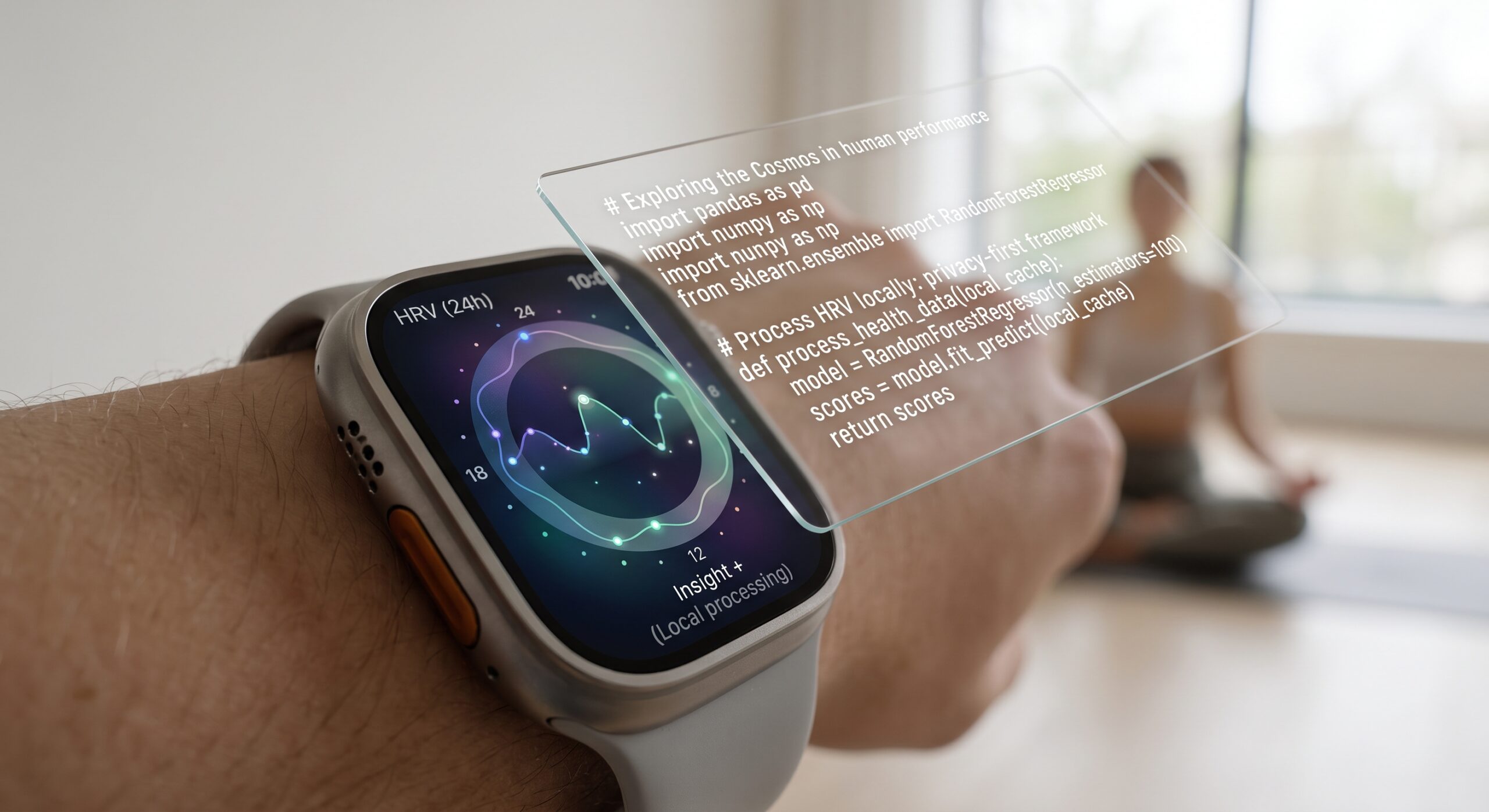
In the quest to understand ourselves and the complex systems that govern our lives, from the vastness of space to the intricate workings of our own bodies, data is our ultimate guide. At Explore the Cosmos, we believe in the power of data-driven analysis to foster discovery and empower individuals. Today, the frontier of personal discovery extends to our own physiology, with wearable technology rapidly evolving to offer unprecedented insights. But as these devices become more sophisticated, a crucial question arises: how can we harness this wealth of personal health data without compromising our privacy? By 2026, the landscape of ML for health and wearables is set to transform, offering powerful tools for understanding our bodies, all while respecting our data sovereignty.
The Wearable Revolution: From Fitness Trackers to Clinical Companions
The journey of wearable technology has been remarkable. What started as simple step counters has blossomed into sophisticated health monitoring platforms. By 2026, we’re seeing a significant shift from basic fitness tracking to a more holistic approach to wellness, integrating sleep, recovery, stress, and even nutrition insights. This evolution is driven by advancements in sensor technology and, crucially, the integration of artificial intelligence (AI) and machine learning (ML). These intelligent algorithms are transforming raw physiological data into actionable insights, helping us understand our bodies like never before. For instance, in 2026, smartwatches are no longer just reporting steps; they offer FDA-cleared capabilities for detecting atrial fibrillation, screening for sleep apnea, and monitoring blood pressure. This move towards clinical-grade monitoring is blurring the lines between consumer wellness devices and medical-grade technology. Biosensors and smart patches are also becoming more prevalent, designed for continuous, low-friction monitoring of vital signs, making them invaluable for chronic care and remote patient monitoring. The market is booming, with global wearable device shipments projected to reach 614 million units in 2026, and the wearable fitness tracker market alone expected to reach $70.3 billion.
ML at the Core: Turning Data into Intelligent Health Insights
Machine learning is the engine driving this transformation. AI algorithms are now capable of integrating input from a wide array of miniaturized sensors—tracking heart rate variability, respiration, blood oxygen levels, and more. This isn’t just about collecting more data; it’s about extracting deeper meaning. By analyzing vast datasets, ML algorithms can identify subtle patterns and predict potential health issues before they become serious. For example, AI-powered wearables can now detect early signs of conditions like heart attacks or strokes by recognizing subtle changes in heart rate or blood pressure. This shift from reactive to preventive care is revolutionizing how we approach our health.
In 2026, we’re witnessing a surge in AI-enabled functions within wearables, with approximately 40% of newly launched devices expected to incorporate these capabilities. This doesn’t mean wearables are replacing your doctor, but they are becoming powerful co-pilots in your health journey. ML excels at identifying patterns in noisy, multi-sensor data, turning a stream of numbers into reliable health metrics. This is particularly evident in areas like sleep tracking, where AI enhances multi-night trend detection and risk screening, providing more nuanced insights than ever before.
The Rise of New Form Factors and Data Fusion
While smartwatches remain dominant, the wearable landscape is diversifying. Smart rings are emerging as a significant breakout category, projected for substantial shipment growth. These discreet devices, like the Oura Ring Gen 4, are now offering FDA-cleared sleep apnea detection, fitting seamlessly into 24/7 wearability. Beyond rings, we’re seeing innovation in smart glasses with integrated biometric tracking and flexible health patches for round-the-clock monitoring. The trend across all device categories is the fusion of multiple sensor types—optical heart rate, accelerometers, gyroscopes, skin temperature, SpO2, and even ECG electrodes. The real magic happens when ML algorithms fuse these diverse data streams to produce higher-confidence health signals.
Data Sovereignty: Our Commitment to Privacy-First Analysis
At Explore the Cosmos, our mission is to empower users through data-driven discovery while rigorously protecting their privacy. This ethos is deeply embedded in our core offerings, such as FinFortress and the Apple Health Cycling Analyzer. We understand that your health data is intensely personal, and we champion a local-first software approach. This means processing your data on your device, without ever uploading sensitive telemetry to the cloud. In the rapidly advancing field of ML for health, this commitment to data sovereignty is paramount.
While the capabilities of AI-enhanced wearables are astounding, the potential for data misuse or invasive practices is a growing concern. Many consumer expectations are evolving, with users increasingly aware and concerned about how their wearables collect and use data. This tension between innovation and trust, where accuracy, battery life, and data privacy are central, shapes the industry. Unlike some platforms that might aggregate and monetize user data, our tools are built with a privacy-first architecture. For example, our Apple Health Cycling Analyzer processes your exported Apple Health data directly in your browser, providing insights without sending any of your personal health information to our servers. This is the future we’re building: powerful data analysis that respects your autonomy.
Looking Ahead: The Future of ML for Health and Wearables
The trajectory for ML in health and wearables is clear: continuous, personalized, and increasingly predictive health monitoring. By 2026, we can expect even more sophisticated non-invasive biomarker tracking, such as cuffless blood pressure monitoring and non-invasive glucose trend analysis. While the truly game-changing advancements like continuous non-invasive glucose monitoring might still be a few years from widespread consumer availability for some, the progress is undeniable. The integration of wearables with telemedicine platforms is also set to grow, enabling remote consultations and proactive care management.
However, as technology advances, so too must our awareness and control over our data. The industry is grappling with challenges of fragmentation, interoperability, and regulatory shifts, alongside the persistent need for robust privacy protections. At Explore the Cosmos, we are committed to navigating this complex landscape by developing tools that are not only powerful but also transparent and privacy-centric. We believe that true discovery comes from understanding your data, not from surrendering it. Join us as we continue to explore the cosmos of human performance, powered by data and guided by a commitment to your privacy.
Leave a Reply