
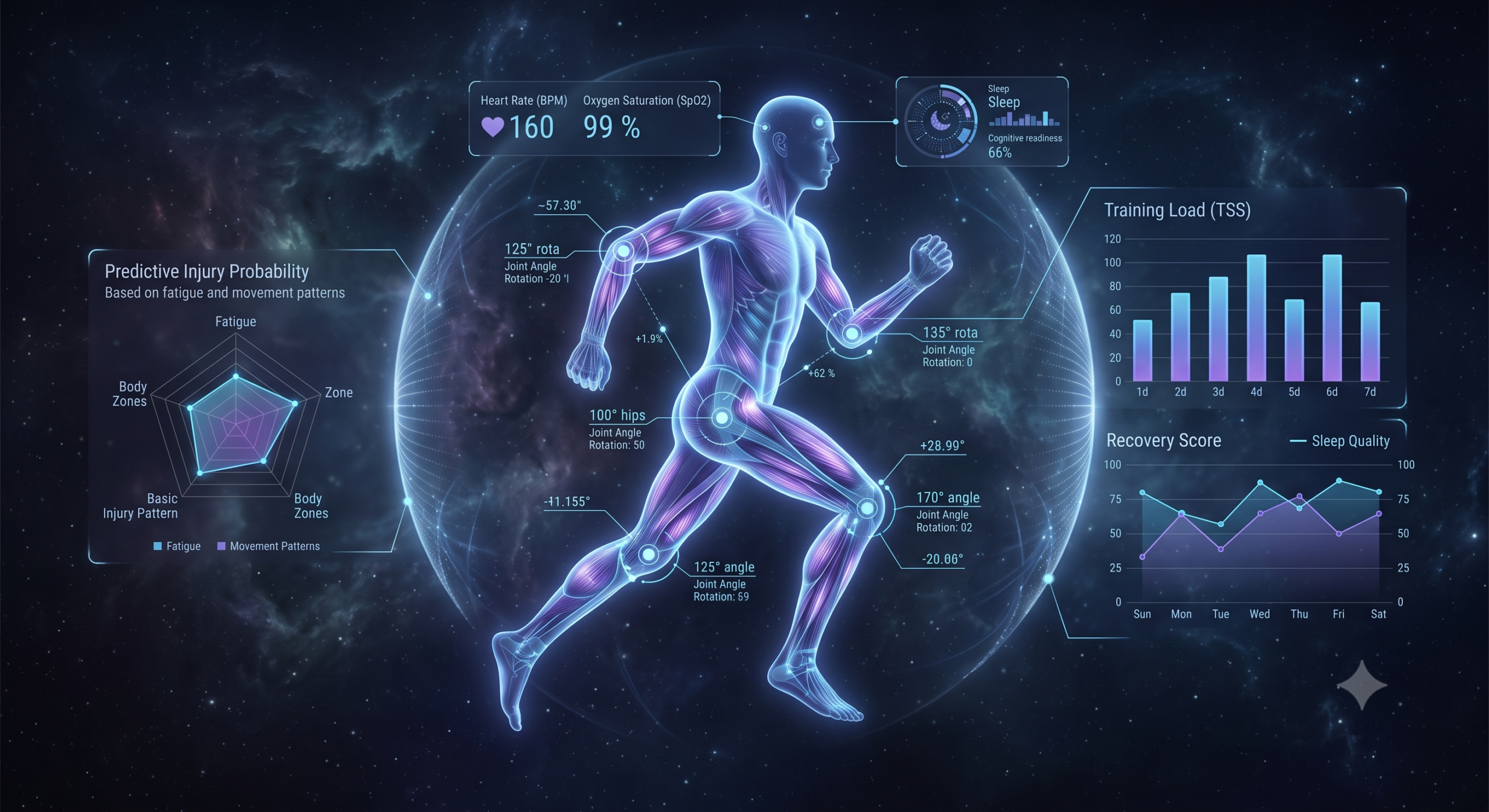
In our journey at Explore the Cosmos, we delve into the intricate dance between science, data, and discovery across various complex systems. From the vastness of space to the incredible intricacies of human performance, data-driven analysis is our compass. Today, we’re setting our sights on a challenge many of us face, whether we’re recreational cyclists, dedicated athletes, or simply engaged in daily life: the ever-present risk of injury.
How often have you pushed a little too hard, felt a twinge, and wondered if you were on the verge of something more serious? For too long, injury prevention has been largely reactive – waiting for symptoms to appear before taking action. But what if we could predict potential injuries before they manifest, using the power of data? This isn’t science fiction; it’s the cutting edge of data science, and it’s rapidly transforming how we approach health and human performance. We’ll explore how machine learning is making proactive injury prevention a reality, offering insights that resonate with our mission to understand complex systems through clear explanation and hands-on application.
What is Injury Risk Prediction?
At its core, injury risk prediction is the application of statistical and machine learning techniques to assess an individual’s likelihood of sustaining an injury. Instead of relying solely on general guidelines or post-injury diagnostics, it leverages a wealth of personal and contextual data to identify patterns and indicators that suggest elevated risk. For us at Explore the Cosmos, this aligns perfectly with our ethos: demystifying complex concepts by grounding them in concrete examples and demonstrating their real-world impact.
Imagine being able to understand the subtle signals your body sends before a major problem arises. That’s the promise of data-driven injury prediction. It’s about moving from a reactive “fix it when it breaks” mentality to a proactive “prevent it before it happens” strategy. This shift is particularly impactful in fields focused on human performance, like professional sports, where the cost of injury—in terms of individual well-being, team success, and financial burden—is incredibly high. However, as we’ll see, these advanced methods are increasingly accessible to anyone keen on optimizing their health and fitness.
The Data-Driven Revolution: How Machine Learning Makes It Possible
The magic behind injury risk prediction lies in its ability to process vast, often complex datasets and uncover insights that human observation alone might miss. This is where data science and machine learning (ML) truly shine. For those new to the terms, think of machine learning as teaching a computer to identify patterns and make decisions based on examples, without being explicitly programmed for every single scenario. It learns from data, much like we learn from experience.
The Workflow: From Raw Data to Predictive Insights
The process generally follows a familiar data science workflow:
- Data Collection: This is the foundation. It involves gathering relevant information, which can range from physiological metrics (heart rate, sleep patterns), biomechanical data (movement efficiency, gait analysis), training load (volume, intensity), and even historical injury records. Think of the rich data collected by wearables, smart sensors, and even our own Apple Health Cycling Analyzer.
- Feature Engineering: Once data is collected, it needs to be transformed into “features”—specific, measurable attributes that the machine learning model can use. For instance, instead of just raw heart rate, we might calculate Heart Rate Variability (HRV) as a feature, which can be a key indicator of recovery and stress.
- Model Training: Here, we feed the prepared data into a machine learning algorithm. Common algorithms for this type of prediction include Random Forests, XGBoost, and Artificial Neural Networks. The model learns to associate certain patterns of features with a higher or lower risk of injury.
- Prediction and Interpretation: Once trained, the model can then take new, unseen data and predict the likelihood of an injury. Crucially, as we emphasize at Explore the Cosmos, understanding “what the numbers mean” is paramount. This is where the emerging field of Explainable AI (XAI) comes in, helping us understand why a model made a particular prediction, rather than just accepting a black box output.
Case Study in Action: Proactive Injury Management
Let’s consider a hypothetical scenario: a team of avid amateur cyclists, keen on optimizing their performance and avoiding the setbacks of injury. Traditionally, they might track mileage, speed, and perhaps heart rate, adjusting their training based on how they “feel” or after an injury has already occurred. But with data-driven injury risk prediction, their approach changes dramatically.
Imagine each cyclist using advanced wearables that continuously monitor their physiological and biomechanical data. This isn’t just about tracking a single metric; it’s about synthesizing a comprehensive picture:
- Training Load: Are they gradually increasing their load, or are there sudden, risky spikes? A 10% increase in training load, for example, has been shown to increase injury risk by about 1.2 times.
- Sleep Quality: Is their sleep consistent and restorative? Poor sleep is a significant factor in increased injury risk and slower recovery.
- Movement Mechanics: Are there subtle deviations in their pedaling stroke or body posture that indicate fatigue or compensatory movements, potentially signaling an impending strain or overuse injury?
- Recovery Metrics: Beyond just sleep, are indicators like Heart Rate Variability (HRV) showing that their body is recovering adequately from the previous day’s efforts?
All this data is fed into an ML model. Instead of waiting for a cyclist to report knee pain, the system might flag a particular individual who has had a significant jump in training load, combined with consistently poor sleep, and a detected asymmetry in their pedal stroke. This “early warning” allows coaches and the cyclists themselves to make proactive adjustments: perhaps a rest day, a reduced intensity session, or specific strengthening exercises to address the imbalance, effectively averting a potential injury before it sidelines them.
The Cutting Edge of 2026: Trends Shaping Injury Prediction
The field of injury risk prediction is evolving at an incredible pace, driven by technological advancements and a deeper understanding of human physiology. As we look at the landscape in 2026, several key trends stand out, further solidifying the role of data science in human performance and health.
1. AI-Powered Wearable Technology & Real-time Biomechanical Monitoring
Wearable technology has moved far beyond simple step counting. In 2026, devices, increasingly enhanced by artificial intelligence, are delivering predictive insights in real time. This means monitoring subtle changes in movement mechanics, detecting early signs of fatigue, and even tracking sleep quality to prevent injuries before any symptoms appear. Smart protective gear, such as mouthguards and helmet sensors, now include built-in capabilities to detect dangerous impacts and provide real-time biomechanical feedback, pushing the boundaries of athlete safety. We are seeing a shift from mere data collection to actionable intelligence, helping individuals and teams make informed decisions on the fly.
2. The Rise of Digital Twins and Personalized Modeling
One of the most exciting developments is the concept of “digital twins.” Imagine a highly accurate, personalized biomechanical model of yourself, created from your unique data. This digital twin serves as a dynamic reference for real-time risk scoring, allowing for far more precise, individualized threshold calibration than ever before. Instead of comparing your performance to population averages, which may not account for your specific physiology, a digital twin provides a truly personalized benchmark. This trend also extends to hyper-personalized recovery protocols, which can be tailored based on genetic testing, microbiome analysis, and metabolic profiling, moving us toward an era of truly individualized health optimization.
3. From Reactive to Proactive: The Emphasis on Explainable AI (XAI)
The prevailing mindset in injury prevention has decisively shifted from reactive to proactive, with data-driven approaches taking center stage across sports and even in workers’ compensation. While AI and machine learning models are powerful, their practical value hinges on trust and understanding. This is where Explainable AI (XAI) becomes crucial. In 2026, there’s a significant emphasis on developing models that not only predict injury risk but also articulate why they’ve made that prediction. This interpretability is vital for coaches, clinicians, and individuals alike, empowering them to understand the underlying factors contributing to risk and enabling them to apply human expertise effectively, rather than blindly following algorithmic recommendations. AI is seen as a powerful support tool, not a replacement for human judgment.
Why This Matters to You
The advancements in injury risk prediction hold profound implications for anyone invested in human performance and well-being. For our community at Explore the Cosmos, whether you’re meticulously tracking your cycling performance with our Apple Health Cycling Analyzer or simply curious about how data shapes our world, these developments offer clear benefits:
- Enhanced Safety and Well-being: By identifying risks early, individuals can take preventative measures, reducing the incidence and severity of injuries.
- Optimized Training and Performance: Understanding your body’s limits and recovery needs allows for more intelligent training, leading to better performance without overtraining.
- Smarter Decision-Making: With interpretable insights, you gain a deeper understanding of your own physiological responses, empowering you to make informed decisions about your activity and rest.
- Privacy-First Empowerment: This field highlights the importance of data, and we believe strongly that your personal health data should remain yours. Tools like our Apple Health Cycling Analyzer demonstrate that powerful, data-driven insights can be achieved client-side, respecting your privacy without uploading sensitive information to external servers.
Limitations and the Human Element
While the promise of AI-driven injury prediction is immense, it’s also important to be honest about its limitations—a principle we uphold at Explore the Cosmos. Machine learning models are not infallible; they are only as good as the data they are trained on, and they cannot predict injuries with absolute certainty. Challenges like data heterogeneity, limited generalizability across diverse populations (e.g., different sports, age groups, genders), and compliance issues still exist.
Moreover, the ethical considerations around data privacy are paramount. Our privacy-first approach with the Apple Health Cycling Analyzer underscores our commitment to empowering individuals with their data, securely and transparently. In injury prediction, this means ensuring that personal health information is handled with the utmost care, and that individuals maintain control over their data.
Ultimately, AI and machine learning should serve as powerful aids to human intelligence, not replacements. The most effective injury prevention strategies will always be individualized, multifactorial, and grounded in a collaborative effort between data, technology, and expert human insight from coaches, clinicians, and the individual themselves.
Explore Your Own Performance, Safely
The journey to understand and optimize human performance is one of constant discovery. At Explore the Cosmos, we are committed to providing the tools and knowledge to help you navigate this journey. The advancements in injury risk prediction embody our mission: using science and data to unlock new levels of understanding.
Whether you’re a serious athlete or simply curious about your body’s data, the insights provided by machine learning can help you train smarter, recover better, and significantly reduce your risk of injury. We encourage you to explore the power of your own data, using privacy-first tools like our Apple Health Cycling Analyzer, to gain a deeper understanding of your performance and well-being. The cosmos of human potential is vast, and with the right data-driven insights, you can explore it more safely and effectively than ever before.
Leave a Reply