
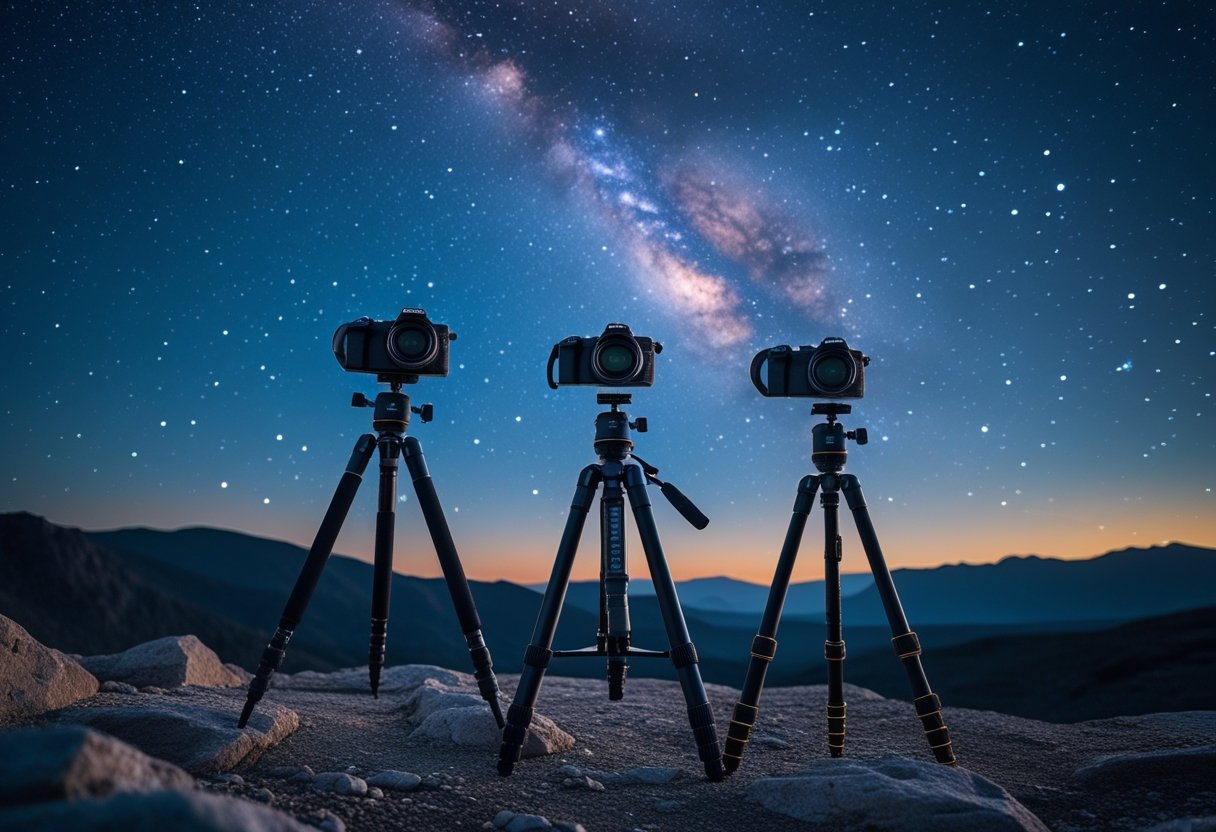
You want steady, shake-free night-sky images without blowing your budget, and the right tripod makes that possible. Choose a tripod that balances rock-solid stability with the payload and height your camera setup needs, and you’ll cut blur on long exposures and capture clearer stars and nebulae.
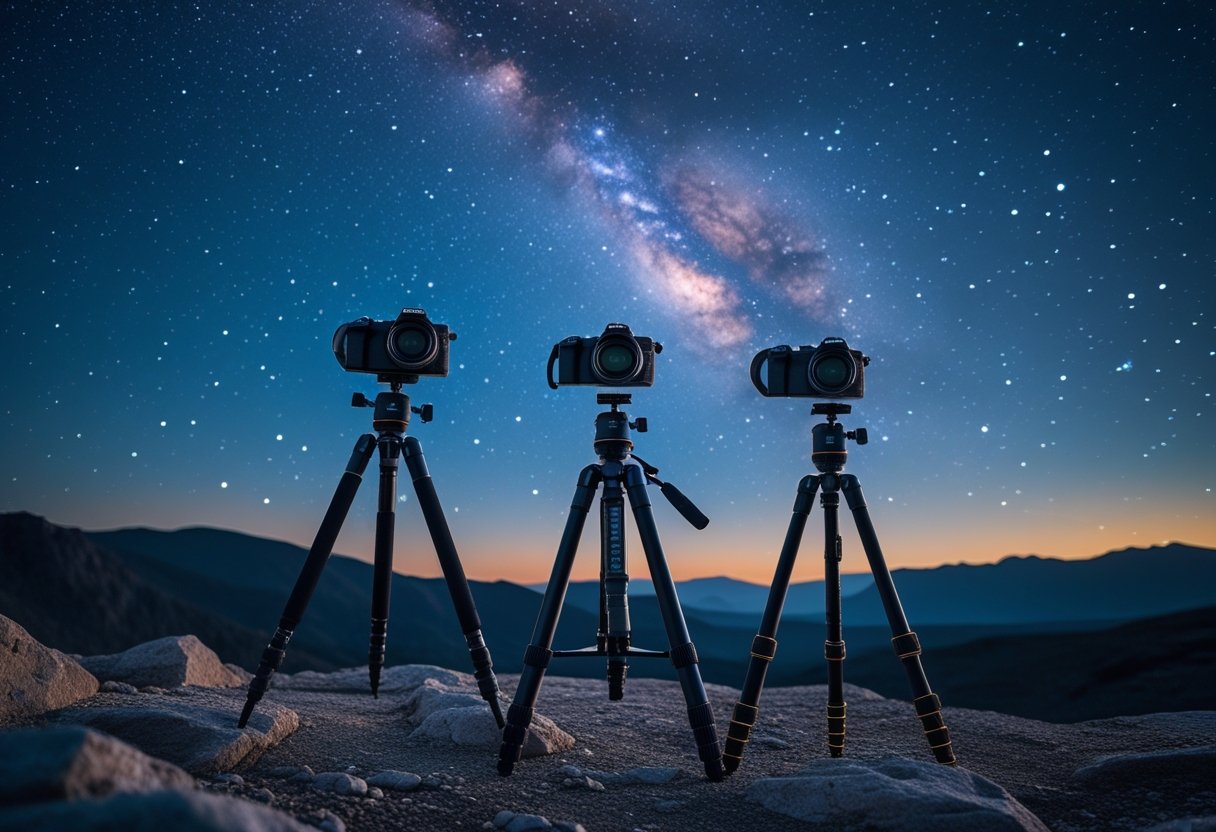
This guide shows which tripods earn top marks for stability, which lightweight models travel well for remote sky sessions, and which heads and accessories complete a dependable astrophotography kit. Expect practical buying advice and specific picks so you can match a tripod to your gear, shooting style, and budget.
Why Stability Is Essential for Astrophotography
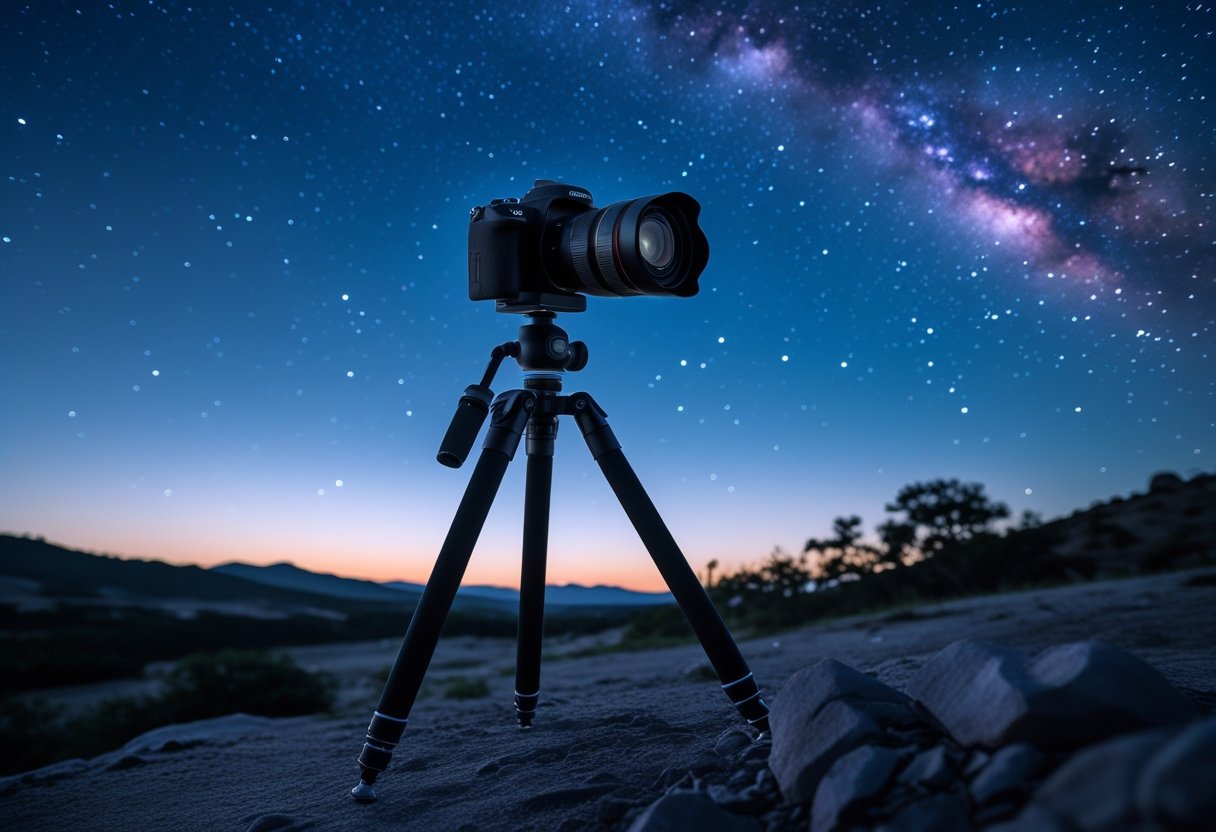
A solid tripod keeps your camera steady for long-exposure astrophotography, prevents star trails and blur, and lets you use heavier lenses or telescopes. You’ll learn how a sturdy tripod reduces motion, why you might trade weight for portability, and how vibration dampening improves point-like stars.
How Tripods Prevent Blur in Long Exposures
When you expose for tens to hundreds of seconds, any movement turns stars into streaks. A stable tripod with adequate weight capacity and rigid leg joints removes mechanical wobble so your sensor records pinpoints instead of trails.
Locking mechanisms matter. Twist locks and flip locks must hold without slippage; worn or loose locks let the head sag mid-exposure. Choose a tripod whose rated payload exceeds your camera plus lens by 30–50% to avoid flex.
Center columns and loose accessories are common culprits. Avoid extending the center column during long exposures when possible, or use a short column and raise the legs instead. Hang a weight from the center hook to increase contact pressure with the ground and reduce micro-movement.
Stability versus Portability: What Every Astro Shooter Should Know
You’ll often balance a low carry weight against the need for a stable platform. Carbon fiber tripods save muscle and resist temperature changes, but lighter models can be more susceptible to wind-induced motion. Aluminum tripods usually cost less and resist knocks, but they add bulk on hikes.
Evaluate your typical setup: if you use a DSLR with a 200mm lens or a small refractor, a 5–8 kg payload tripod works well. For heavy mounts or medium Schmidt-Cassegrains, step up to a 10+ kg capacity tripod. Also check max height: you want eye-level framing without maxing the center column.
Think about terrain. Spiked feet and low-angle leg spreads give better ground grip on uneven soil or gravel. If you travel to remote dark sites, prioritize a tripod that converts to a monopod or has quick-release leg sections for faster setup.
The Impact of Vibration Dampening on Image Sharpness
Vibration dampening turns residual vibrations into information you can control. Materials and design both matter: carbon fiber tubes absorb high-frequency micro-vibrations better than aluminum, and thicker leg diameters reduce resonant wobble.
Add-on steps help. Use a remote shutter or intervalometer, enable mirror lock-up or electronic front-curtain shutter, and place a small vibration-dampening pad between head and camera if you still see blur. Sandbags and ground-anchored weights lower the tripod’s natural frequency, reducing wind and footfall effects.
Heads contribute too. A well-made ball or geared head that clamps rigidly prevents slow drift during long-exposure astrophotography. Inspect any quick-release plate for play; even 0.5 mm of movement at the plate can smear fine star detail on multi-minute exposures.
Key Features to Look For in an Astrophotography Tripod
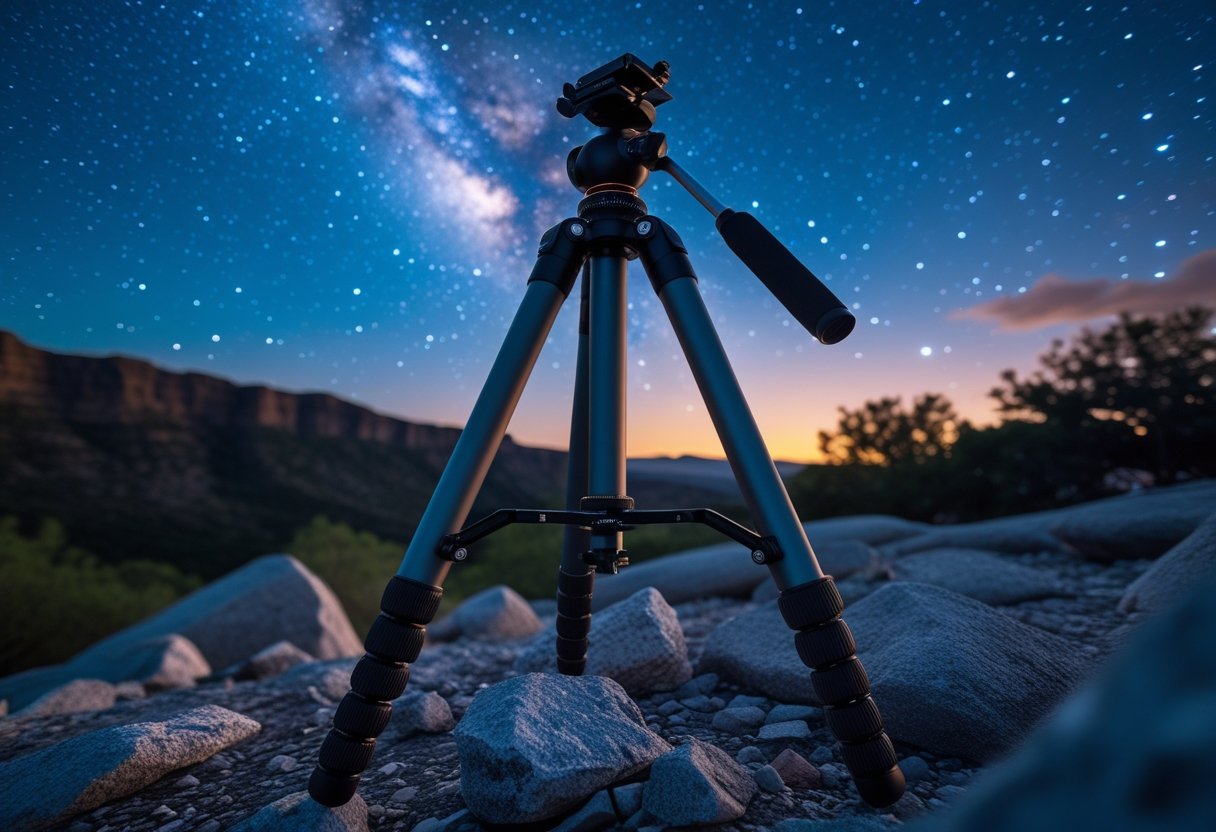
You need a tripod that holds heavy camera and lens setups steady, stays usable in wind and uneven ground, and adjusts precisely for framing and tracking. Focus on how much weight it safely carries, what it’s made of, and the leg and head controls you’ll use in the field.
Load Capacity and Payload Explained
Know the difference between a tripod’s rated load capacity and the payload you actually place on it. Load capacity (or weight capacity) is the maximum static mass the tripod and head can support; payload should include camera, long lens, equatorial head or tracker, cables, and any counterweight. Aim for a system rated at least 1.5× the total gear weight to avoid sag and vibration during long exposures.
Check spec sheets for separate ratings: some manufacturers list tripod load capacity and the ball head’s payload independently. That matters if you mount a heavy equatorial tracker or a large telephoto lens. Also consider dynamic forces—wind and the torque from an off-center counterweight—when estimating real-world requirements.
Tripod Materials: Aluminum, Carbon Fiber, and More
Material choice affects weight, stiffness, and vibration damping. Aluminum (aluminium) tripods cost less and offer good stiffness, but they transmit more vibration and feel heavier to carry. Carbon fiber tripods are lighter and damp vibrations better, which helps long-exposure sharpness; they usually cost more but improve portability for fieldwork.
Other trade-offs: carbon fiber resists cold better (less heat-contraction), while aluminum can be more budget-friendly and durable in rough handling. Look for models that specify stiffness or resonance testing, and check the advertised payload capacity—carbon fiber models often support equivalent payload at lower tripod weight. For mixed use, mid-range aluminium tripods with a sturdy ball head give strong value.
Leg Locks, Feet, and Height Adjustments: Ensuring Reliable Support
Leg locks determine setup speed and reliability. Flip locks open and close quickly and work well with gloves, while twist locks give a sleeker profile and can be more secure against accidental release. Choose the lock style you can operate in cold or dark conditions; high-quality flip locks like the G-Lock Ultra-style (or robust twist-lock mechanisms) prevent slippage under heavy payloads.
Feet and height range matter for stability. Spiked feet or interchangeable rubber tips let you anchor on rock, dirt, or pavement. Check the tripod’s adjustable height range and lowest-centre-column option—lower center-of-gravity setups reduce vibration. A built-in bubble level and a hook for a counterweight let you fine-tune balance when you mount a tracker or heavy lens.
Top-Rated Tripods for Astrophotography
These picks prioritize rigidity, payload capacity, and practical setup for long exposures and mounted trackers. Expect options that range from expedition-grade carbon fiber to compact, budget-friendly aluminum with useful accessories.
Gitzo Systematic Series 5: The Premium Powerhouse
You get maximum rigidity and near-zero flex with the Gitzo Systematic Series 5, built for large refractors, heavy CCD rigs, and pro mounts. The laminated carbon-fiber legs resist vibration and maintain stability in cold, dew-prone conditions, so long exposures stay sharp.
Leg locking and geometry give a very wide stance for better moment-of-inertia damping. The removable center column and high payload (often 100+ lb class when heads are matched correctly) let you pair heavy equatorial heads — ideal if you plan to mount a large mount or an observatory-style setup.
Expect professional ergonomics: stainless-steel fittings, precise leg-angle selectors, and compatibility with Arca-type heads or dedicated dovetail plates. If you treat astrophotography seriously and want a tripod that won’t limit your mount choice, this is a top-tier option.
Sky Watcher Star Adventurer Tripod: For Star Trackers and Mounts
This Sky-Watcher tripod matches the Star Adventurer and Star Adventurer GTI mount families and gives a compact, low-profile platform tailored for portable tracking. It prioritizes a stable base with spreader options and camera-leveling convenience for short- to mid-range payloads.
Its footprint and leg-locking system reduce sidereal wobble when paired with the Star Adventurer 2i Pro Pack or GTI mount kits. The height and stiffness fit common camera-plus-lens setups and small refractors used in wide-field nightscapes and time-lapses.
You’ll appreciate how the tripod integrates with the mount’s bolt pattern and accessory mounting points, reducing adapter fuss. If you use a Star Adventurer GTI or similar portable tracker, this tripod helps you squeeze clean, long-exposure frames from a lightweight system. See the Sky-Watcher Star Adventurer details for more on compatibility and tracking features (https://telescopemania.com/best-tripods-for-astrophotography/).
K&F Concept Tripod: Budget-Friendly Versatility
The K&F Concept tripod offers surprising capability for low cost, making it a reliable choice if you primarily shoot with a DSLR and mid-range telephoto lenses. It balances portability and load capacity (around 8 kg), which works for most camera-plus-lens combos used in nightscape and star-trail work.
You get a 360° ball head for quick framing, a reasonable maximum height for landscape compositions, and a lightweight folded length for backpacking. The aluminum/carbon hybrids on some models make it an even better value for multi-night field trips.
If you need a tripod that supports casual astrophotography, time-lapses, and occasional tracked exposures without breaking the bank, this unit covers essentials: decent stiffness, usable height range, and accessory compatibility for phone clamps and small levelling bases.
Victiv 74 Camera Tripod: Heavy-Duty for the Explorer
The Victiv 74 is an aluminum-heavy option built for durability in rugged conditions and heavier camera rigs. Its robust legs and beefy locks reduce micro-movements during long exposures and when wind gusts hit, making it suitable for outdoor excursions and vehicle-based setups.
It carries larger DSLRs, heavier zooms, and small mounts comfortably, and usually ships with a padded carry bag for travel. The tripod’s weight adds steadiness but costs some backpacking convenience — choose it when you prioritize stability over ultralight travel.
This model pairs well with sturdy ball heads or small equatorial mounts that need a firm base. If you want a practical, heavy-duty astrophotography tripod that survives rough field use and supports above-average payloads, the Victiv 74 is a dependable choice.
Stable Yet Portable: Lightweight Tripods for Astro Adventures
You need a tripod that balances low weight with rock-solid steadiness so your long exposures stay sharp and your pack stays light. Focus on payload capacity, leg-lock type, and whether the tripod accepts a monopod conversion to cover both travel and backyard needs.
Lightweight Options for Traveling Astrophotographers
Choose carbon-fiber or high-grade aluminum designs that keep weight under ~3–4 kg while still supporting your camera plus star tracker or small OTA. Look for rated payloads at least 1.5× your gear weight; for example, a camera+lens+tracker combo of ~9 kg needs a tripod rated ≈14 kg to avoid flex during long exposures.
Leg sections matter: fewer sections (2–3) are stiffer but bulkier; 3–4 sections pack smaller but may trade some rigidity. Twist locks warm quickly in cold nights and are fast to operate; flip locks pack simpler in gloves.
Check for wide rubber or spiked feet to stabilize on dirt or rock. A removable center column helps — keep it stowed for astrophotography to minimize vibration. If you plan to hike, prioritize a model with a padded carrying strap or included bag to reduce fatigue on long approaches.
2-in-1 Tripod and Monopod Conversions
A 2-in-1 tripod/monopod gives you a lightweight travel tripod and a quick monopod for handheld or low-angle work. Many travel tripods convert by removing a center column or one leg; verify the conversion is tool-free and the monopod retains a secure head mount.
For astrophotography, you’ll use the tripod mode with all legs deployed. The monopod mode remains useful for scouting, daytime telephoto shots, or mounting a star tracker for very light rigs.
Check attachment threads and leg diameter: a thicker leg that doubles as a monopod provides better stability when used solo. Avoid models that sacrifice rigidity for conversion convenience; if the monopod collapses under load, it will limit your usable payload for night-sky setups.
Best Travel Tripods for the Night Sky
Pick models that combine sub-2.5 kg weight with payloads ≥10–15 kg for serious travel astrophotography. Examples include compact carbon-fiber legs, short removable center columns, and ball heads rated for at least your camera+lens weight.
Prioritize: (1) payload rating, (2) leg spread/foot design, and (3) quick, gloved-friendly locks. If you carry a star tracker, choose a tripod that allows the tracker to sit low and level without the center column extended.
Consider practical features: integrated bubble level, reversible leg angles for low shots, and a head that detaches easily for storage. If you want suggestions to match a specific camera, tell me your camera, lens, and whether you’ll use a star tracker or small telescope.
Tripod Heads and Accessories for the Perfect Shot
Choose heads and accessories that keep your camera rock-steady, let you frame quickly, and enable long, vibration-free exposures for tracking or wide-field work.
Choosing Between Ball Heads and Pan Tilt Heads
You’ll pick a ball head when you need fast framing and minimal fuss. A 360° ball head gives full rotation and tilt in one lock; that’s ideal for quickly composing a wide-field sky shot with a camera and lens. Look for a high-load-rated ball head if you use heavy lenses, star trackers, or a telephoto for lunar detail.
Use a pan tilt head when you require precise, axis-by-axis control—handy for framing sequences or doing stitched panoramas. Pan tilt heads lock each axis independently, which reduces drift during long exposures. For video tripod work choose a fluid pan tilt variant to avoid jerks when you push the camera. Match the head’s payload to your rig and prefer metal construction and smooth, low‑backlash knobs.
Quick-Release Systems: Speed and Convenience
A reliable quick-release system saves you time and prevents accidental drops. Choose an Arca-Swiss‑compatible quick-release plate and clamp for broad compatibility across ball heads, panoramic ball head adapters, and gimbals. Plates with anti-twist grooves and safety stops give added security for heavier camera + lens setups.
Consider dual‑plate systems if you swap between tripod and mount often. Low-profile plates reduce camera height and center-column use, improving stability. For astrophotography, always torque the clamp firmly and test the plate lock before long exposures. If you plan time-lapse or panorama stacks, a quick‑release that repeats precise register points speeds repeatable framing.
Counterweights, Motorized Mounts, and Remote Triggers
Counterweights matter when you attach a telescope or heavy lens to an equatorial mount or motorized mount. Balance your setup on the RA axis so the motorized drive doesn’t strain—underbalanced or overbalanced rigs cause periodic error and tracking drift. Use a small counterweight if you add accessories like guide scopes or heavy cameras.
Motorized mounts provide precise sidereal tracking for long exposures; choose a mount with low periodic error and payload capacity exceeding your fully loaded setup. Pair motorized equatorial mounts with a guide camera and autoguider for sub‑arcsecond accuracy. Finally, use a remote shutter release or intervalometer (wired or wireless) to eliminate contact vibration. For mirrorless systems, enable electronic shutter or use bulb‑ramping features with your intervalometer to avoid mechanical vibration during multi‑minute exposures.
How to Choose the Best Tripod for Your Astrophotography Needs
Pick a tripod that fits the exact gear you plan to use and the shooting style you prefer. Focus on payload capacity, material, and whether you’ll use a star tracker, camera-only setup, or a telescope on a mount.
Matching Tripods to Gear: Cameras, Trackers, and Telescopes
Match tripod payload capacity to the combined weight of your camera, lens, and any tracker or mount. Weigh your camera + heaviest lens + star tracker; aim for a tripod rated at least 20% higher than that total. For example, a 12 lb camera+lens+tracker stack needs a tripod with a minimum ~15 lb payload capacity.
Choose materials by use: carbon fiber saves weight for travel and reduces thermal conduction on cold nights, while aluminum gives lower cost and added mass that can help stability in wind. Avoid using the center column for astrophotography; keep it lowered to reduce vibration. If you plan deep-sky imaging with a GOTO mount, pick a tripod that can hold the mount + OTA comfortably—many deep-sky setups need 40–60 lb-rated tripods. For camera-on-tracker landscape shots a rigid, lighter tripod with a reliable ball head works fine.
Budgeting for Quality Without Sacrifice
Decide the most important trade-off for you: portability or absolute stiffness. Set a realistic budget range: under $150 for basic camera tripods suitable for light tracker + small camera bodies; $200–600 for sturdy carbon/aluminum hybrids that handle heavier camera/tracker combos; >$600 for professional-grade, high-payload carbon tripods that double as telescope supports.
Prioritize payload capacity and leg-lock quality over bells and whistles. Spend on a tripod with solid leg locks and wide rubber or spiked feet rather than a fancy head if money is tight. Consider well-reviewed budget tripods that advertise astrophotography performance and check real-world payload tests. If you plan to upgrade gear, buy a tripod that supports future weight increases to avoid replacing it later.
Troubleshooting Common Stability Pitfalls
If you get star trails or blurred detail, check these quick fixes: ensure leg sections are fully extended in the correct order (thick-to-thin first), tighten all leg locks, and remove the center column or lower it completely. Small errors like a loosely mounted camera plate or a soft foam pouch hung from the center can introduce micro-vibrations—secure your head and avoid dangling accessories.
Counter wind by using lower tripod height and hanging ballast (a weight bag) from the tripod hook when available. On uneven ground, swap rubber feet for spikes to prevent slipping. If vibration persists during long exposures, switch to a heavier tripod or add sandbags; alternatively, use a shorter exposure stack with a star tracker instead of one very long exposure.
Leave a Reply