
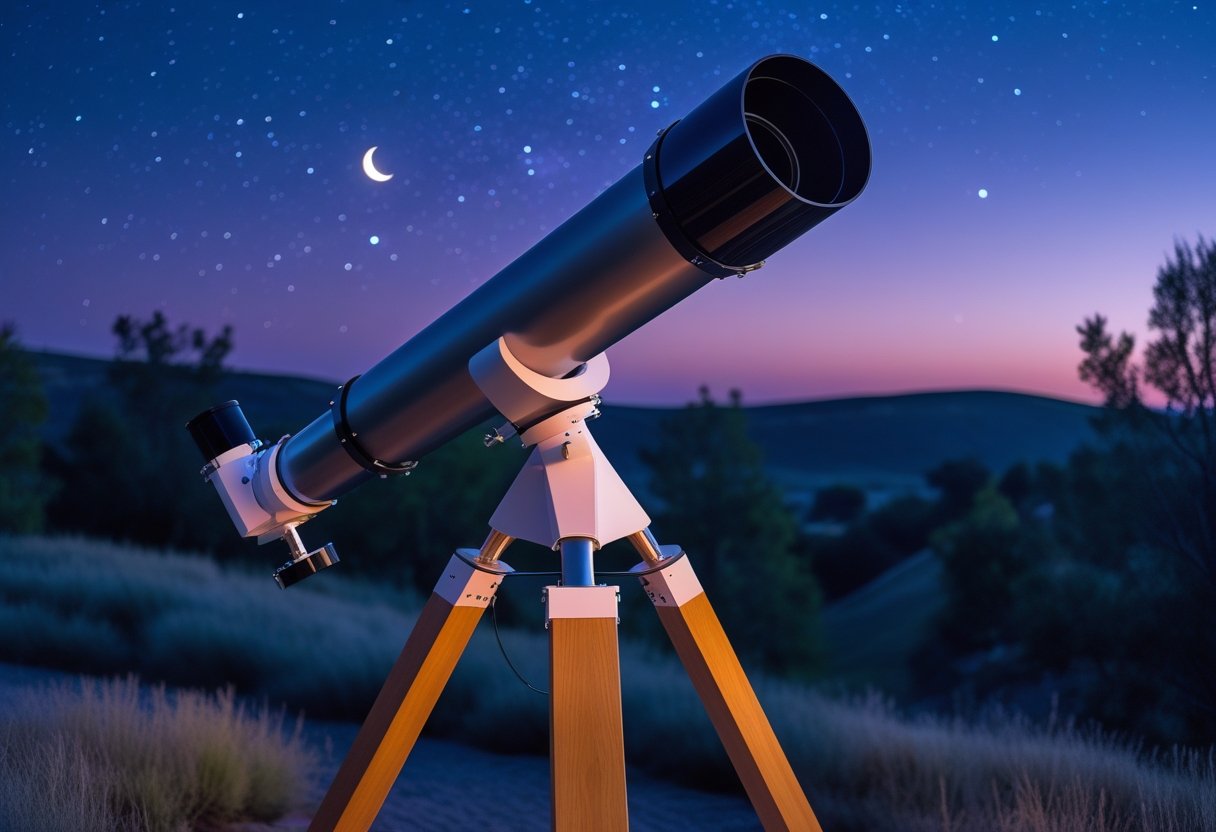
You can get the most aperture for your money with a Dobsonian, and that makes a dramatic difference if you want brighter, clearer views of galaxies, nebulae, and star clusters. If your priority is maximum visual performance per dollar—especially for deep-sky observing—a Dobsonian remains one of the best choices in 2026.
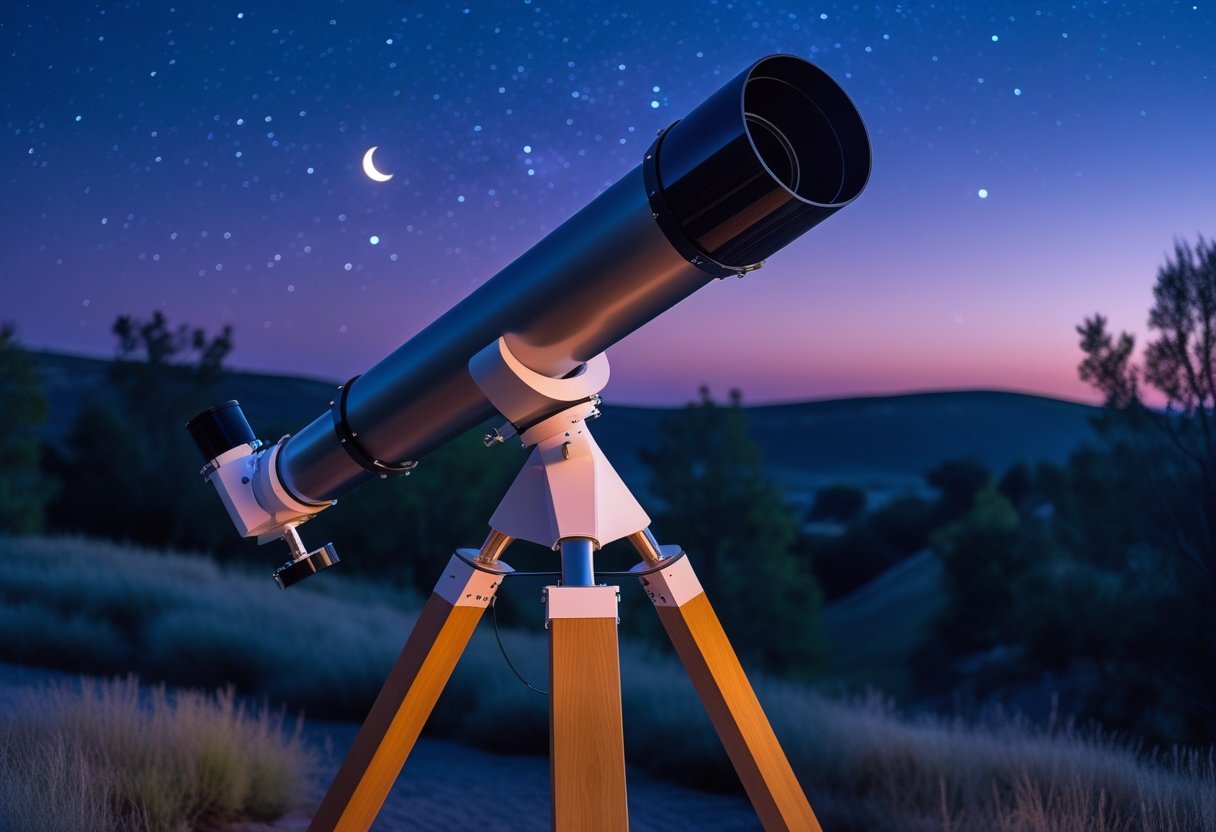
You’ll explore how Dobsonians work, why they deliver such strong aperture value, the practical trade-offs (portability, tracking, and astrophotography limits), and which modern models add helpful tech like smartphone-assisted locating or collapsible designs. Expect straightforward buying guidance so you can match your observing goals and budget to the right Dobsonian.
What Is a Dobsonian Telescope?
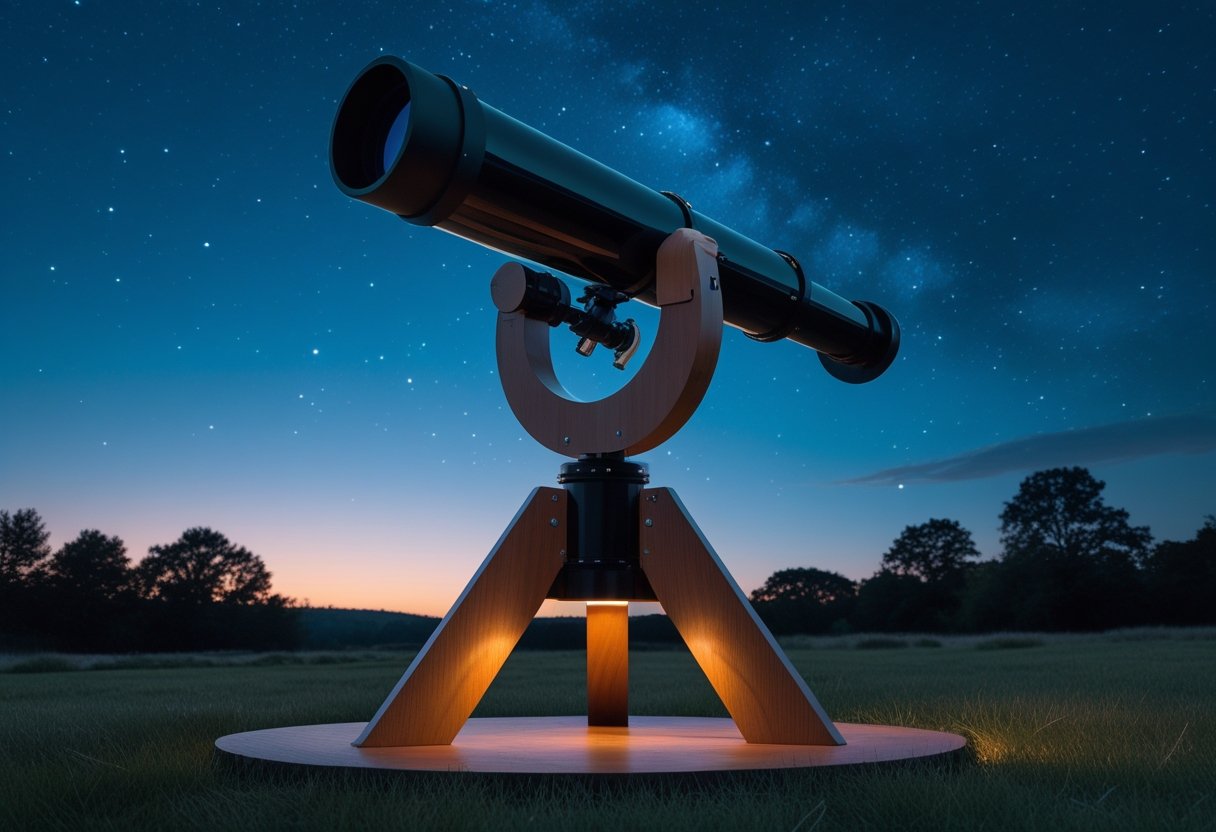
A Dobsonian is a large-aperture Newtonian reflector on a simple alt-azimuth base that maximizes light-gathering while minimizing cost and complexity. You get big mirrors, straightforward controls, and raw visual power for deep-sky observing without motor drives or complicated electronics.
How Dobsonian Telescopes Work
A Dobsonian uses a parabolic primary mirror to collect light and form an image at the Newtonian focal plane. Light reflects from the primary to a secondary mirror, which redirects the beam sideways into an eyepiece you look through.
Because the optical train is a standard Newtonian reflector, you can use typical eyepieces, Barlow lenses, and eyepiece-mounted cameras for visual work and basic astrophotography.
The mount is an alt-azimuth design: you move the tube up-down (altitude) and left-right (azimuth). This makes pointing intuitive but introduces field rotation for long-exposure astrophotography.
You control tracking manually by nudging the tube or with optional electronic push-to or tracking upgrades if you want steadier views.
Key Components and Features
The two most visible parts are the optical tube assembly (OTA) with the parabolic primary mirror and the Dobsonian mount (alt-azimuth rocker box). The mirror diameter (aperture) determines light-gathering and resolving power; larger apertures reveal fainter nebulae and finer planetary detail.
Dobsonians typically prioritize aperture over fancy mounts, so manufacturers and DIYers often use cost-saving materials and simple bearings to keep price per inch low.
Common features you’ll see: a 2–4 inch secondary mirror, a focuser accepting 1.25″ or 2″ eyepieces, a finder scope or reflex sight, and a simple collimation system to align mirrors.
Many models add features like altitude counterweights, compression-ring mirror cells, cribbing for balance, and foam or felt pads on the base for smooth motion. You can upgrade with a digital “push-to” controller or an equatorial platform to reduce field rotation.
The Legacy of John Dobson
John Dobson popularized the design in the 1960s by building large, inexpensive Newtonian reflectors on simple alt-azimuth mounts and taking them to the public. His focus was accessibility: he taught people how to grind mirrors, build simple mounts, and bring telescopes to street-corner star parties.
Dobson’s philosophy changed amateur astronomy: you can prioritize aperture and public outreach over small, expensive tracking scopes. The term “Dobsonian” now identifies both the mount style and a cultural movement toward do-it-yourself, high-aperture visual observing.
His innovations remain practical today: many community observatories and backyard observers still use Dobsonians for their unmatched visual performance per dollar.
If you care about raw observing value and easy setup, Dobson’s approach directly shapes what you can expect from a modern Dobsonian telescope.
Key Advantages of Dobsonian Telescopes
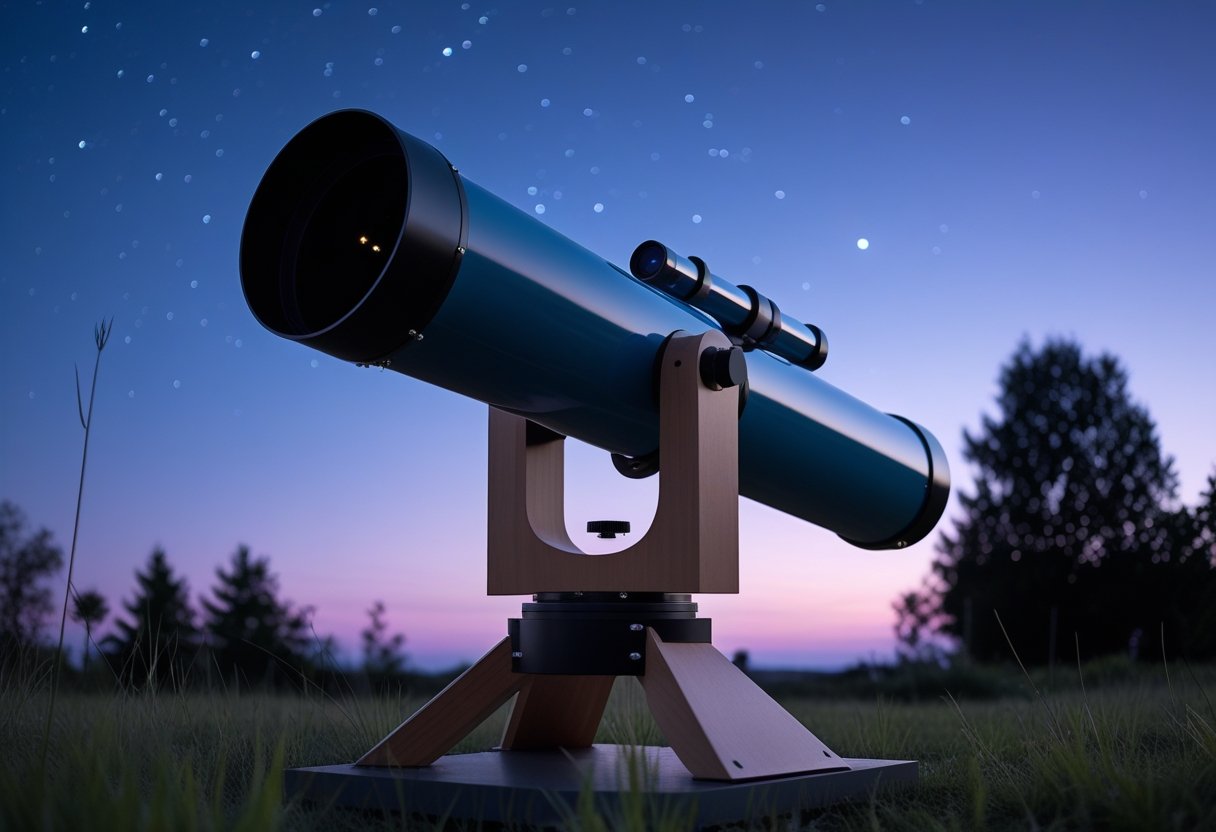
Dobsonians give you very large apertures at low cost, steady mounts that simplify aiming, and optics suited to seeing faint galaxies, nebulae, and star clusters. You get straightforward operation and high aperture-per-dollar, which drives the value for visual astronomy.
Impressive Light-Gathering Power
A Dobsonian’s main strength is aperture. Larger primary mirrors collect more photons, so a 10″ or 12″ Dobsonian will reveal significantly fainter detail than small refractors. This light-gathering ability translates directly into better contrast on nebulae and more resolved structure in galaxy arms.
Because the design minimizes expensive drive systems and complex mounts, manufacturers put more money into mirror diameter. That means stronger aperture per dollar — more mirror for the money — which matters if you want the maximum visual return on a modest budget.
You’ll also notice that bigger apertures shorten the exposure time for visual observation; objects look brighter immediately, which helps when scanning for faint deep-sky objects during a single observing session.
Wide-Field and Deep-Sky Viewing
Dobsonians naturally favor wide-field views thanks to Newtonian optics paired with simple alt‑azimuth mounts. You can use low‑power eyepieces and wide-field 2″ eyepieces to sweep open star fields, globular clusters, and expansive emission nebulae.
For deep-sky observing, the combination of large aperture and generous focal ratio on many Dobs provides bright, well-contrasted images of galaxies and nebulae. You can see more of an object’s faint outer regions compared with smaller telescopes, making them excellent for visual galaxy hunting and exploring low-surface-brightness features.
If you enjoy scanning the Milky Way or hunting objects from the Messier and NGC catalogs, a Dobsonian’s wide-field capability lets you locate and enjoy targets quickly without heavy magnification.
Ease of Use for All Levels
You don’t need complex polar alignment or computer setup to start observing. Point the telescope, lock the altitude, and nudge the tube to follow objects. That simplicity makes a Dobsonian an ideal telescope for beginners and a dependable grab‑and‑go instrument for experienced observers.
The alt‑azimuth mount is stable and mechanically robust, reducing vibration during viewing and making eyepiece changes straightforward. Assembly is often tool‑free, and training new observers is easier because the controls map intuitively to up/down/left/right movements.
For someone starting stargazing, a Dobsonian provides quick satisfaction: you learn star-hopping, see deep-sky objects with large aperture, and spend more time observing than fiddling with electronics.
Types of Dobsonian Telescopes Explained
Dobsonians come in distinct forms that trade portability, stability, and aperture in predictable ways. You’ll choose based on where you observe, how often you move the scope, and how large an aperture you can handle.
Classic Solid Tube Dobsonian
A classic Dobsonian uses a one-piece solid optical tube mounted on a simple wooden or composite altazimuth base. You get rugged stability and unmatched aperture-per-dollar here — a 10″ or 12″ solid tube delivers steady views of faint galaxies and nebulae without complex setup. Collimation is occasional but straightforward with a laser or Cheshire tool.
Expect heavier weight and bulk. That means less frequent transport but better thermal stability and simpler maintenance than some collapsible designs. If you own a model like the Apertura AD10, you’ll appreciate the balance between a stiff tube and a high-quality 10″ mirror. The base often includes altitude bearings and large knobs for smooth manual tracking.
Collapsible and Truss Tube Dobsonians
Collapsible Dobsonians use either a flex/accordion-style tube (e.g., Sky-Watcher Heritage 130-style) or a truss-tube frame that breaks down for transport. You gain major portability: the tube compresses or disassembles into sections that fit in a car trunk. Collapsible designs still give large aperture options, sometimes up to 12″–16″ or larger, while saving storage space.
You trade a bit of rigidity and possibly longer cooldown time for convenience. Collapsible tubes can require slightly more careful collimation after reassembly, and truss-tube models add setup time for securing struts and tensioning. Many observers accept the extra prep for the ability to drive to darker skies with a 12″ or larger scope.
Tabletop Dobsonians
Tabletop Dobsonians target portability and low cost, with short optical tubes that sit on a table or small tripod. Apertures typically range from 76mm to 150mm; the Sky-Watcher Heritage 130 is a well-known collapsible tabletop that offers a surprising 130mm aperture in a compact form. You’ll use a table, stool, or dedicated stand for comfortable viewing.
These scopes are ideal if you live in an apartment or want a grab-and-go instrument for quick sessions. They’re light and easy to carry, but limited in aperture compared with full-size Dobsonians. If you later want larger apertures, tabletop models make a great starter that won’t discourage regular use.
Technology and Modern Innovations
Dobsonians now blend big-aperture optics with practical automation, smartphone pairing, and improved eyepiece/finder hardware. You’ll see models that add GoTo control, app-assisted alignment, and sturdier focusers so you can spend more time observing and less time wrestling with setup.
GoTo and Computerized Dobsonians
Motorized GoTo Dobsonians add tracking and object locating while retaining large apertures. You can choose full alt‑azimuth GoTo systems or dual‑encoder push-to implementations; both reduce the time you spend star-hopping and increase session efficiency. Popular factory examples include Celestron’s motorized Dobsonians and third‑party motor kits that retrofit classic mounts.
If you want near-instant pointing, look for models with precise slewing motors, backlash compensation, and database sizes that include thousands of NGC/IC objects. Accuracy depends on polar alignment alternatives and initial alignment stars; expect <0.5° typical pointing after a two-star align on a modern unit.
You’ll trade some simplicity and portability for power. Battery life, motor noise, and increased weight matter if you haul the scope to dark sites. Consider a computerized Dobsonian when you want quick access to deep-sky targets without mastering manual star-hopping.
App-Enabled and Smartphone Integration
App-enabled Dobsonians let your phone drive alignment, plate-solve, or provide a touchscreen GoTo interface. Celestron’s StarSense Explorer line pairs a camera-based sky recognition device with your phone to perform automated alignment for models such as the Starsense Explorer 8-inch and Starsense Explorer 10-inch. The StarSense app performs plate-solving and can reduce setup to a few minutes.
You benefit from visual star maps, real-time object data, and guided tours inside the app. Some systems support USB or Bluetooth control for telescope motors; others use the phone strictly for alignment while the handset still issues GoTo commands. Battery management and keeping the app updated are practical concerns, but the convenience often outweighs them for casual and beginner observers.
Enhanced Focuser and Finder Features
Modern Dobsonians improve user experience with better focusers and finders. You should prioritize a dual-speed Crayford focuser for smooth, high-precision focusing—important at high magnifications or when using wide-angle eyepieces for low-power sweeps. Metal, low‑flex focus assemblies reduce image shift and support heavier accessories like planetary cameras or eyepiece diagonals.
Finders now range from simple red‑dot units to optical finderscopes and integrated camera-based systems. A wide-angle eyepiece complements the finder by giving larger true fields for initial framing. If you choose a Starsense-style system, the device can replace a traditional finder entirely by using the phone camera for sky recognition and centering, which speeds locating faint objects you’d otherwise miss with a small red-dot finder.
Performance: What Can You See?
Dobsonian telescopes give you bright, high-contrast views of faint objects and wide-field panoramas of star fields. You’ll trade motorized tracking and photography ease for raw aperture and direct visual detail.
Viewing Galaxies and Nebulae
With a 6–10 inch Dobsonian you’ll resolve structure in brighter nebulae and see cores or arms of nearby galaxies. Under a dark sky, the Andromeda Galaxy appears as a bright core with a faint halo; a 10″ Dobsonian will reveal the M51 spiral’s shape as a subtle patch with a brighter knot at the core. Emission nebulae like the Orion Nebula show mottled structure and the Trapezium star group at modest magnification.
Use a low- to medium-power eyepiece (25–40 mm) for large nebulae and a narrowband or UHC filter to increase contrast on emission regions. Galaxies benefit from higher aperture and dark skies rather than extreme magnification; more aperture = more visible surface brightness and detail.
Planetary and Lunar Observation
Dobsonians can deliver crisp lunar views and striking planetary detail when seeing is steady. You’ll see lunar craters, rilles, and central peaks clearly with 6–10 mm eyepieces. Mars displays polar caps and dark surface markings near opposition in larger Dobs (8″+). Jupiter shows cloud bands and the Great Red Spot as contrast-rich features; you can track its four Galilean moons visually.
Planets require higher magnification (150–250× on steady nights) and good collimation. Dobsonians lack equatorial tracking, so you’ll manually nudge the tube to keep targets in view. For afocal or eyepiece-projected photography of the Moon and planets you can get satisfying images, but long-exposure deep-sky astrophotography is not practical without alt-az to equatorial conversion or motorized drives.
Star Clusters and Deep-Space Marvels
Open clusters explode across the field in a Dobsonian: rich clusters like the Pleiades or M35 fill the view and resolve dozens to hundreds of stars at low power. Globular clusters show a tight, grainy core in smaller Dobs and resolve into individual stars toward the outskirts in larger apertures (8″–12″ and above).
Dobsonians excel at visual deep-sky observing: with apertures of 8″ or more you can spot faint Messier and NGC objects—planetary nebulae, emission nebulae, and many galaxies—down to surface brightness limits set by sky darkness. Use low-power wide-field eyepieces for sprawling clusters and nebulae, and switch to medium power to tease out cores, dust lanes, or planetary nebula rings. For systematically hunting faint objects, pair your Dob with a red-dot finder or simple Telrad and a printed or digital star chart for efficient target acquisition.
Limitations and Considerations
Dobsonians give you huge aperture for the money, but they ask for trade-offs in how you use, move, and adapt them to different observing goals.
Manual Tracking and Mount Challenges
You will hand-guide targets with an altazimuth base, so manual tracking is essential. Objects drift in altitude and azimuth at different rates, which means you’ll nudge the scope constantly during high-magnification views. Teflon bearings and well-tuned tension control handles reduce fuss, but they don’t replace a motorized drive or an equatorial mount for long continuous tracking.
Expect a learning curve: practice smooth azimuth movement and steady altitude adjustments to keep planets or tight doubles centered. If you want automatic tracking, add an equatorial platform or motorized Dobsonian drives—these let you track for minutes to hours but add cost and complexity.
Portability, Size, and Storage
Decide how you’ll transport and store the scope before buying. Small 6–8″ Dobsonians are genuinely portable in a car and often come as a single piece. Larger 10–16″ models deliver far more light but generate bulk and weight that usually require disassembly or a wheeled case.
Collapsible tube or truss designs improve portability; you can break the telescope down into manageable pieces. Still, bulky mirrors and heavy rocker boxes can strain trunks and storage spaces. If you value quick setup and frequent transit, prioritize smaller apertures, a lightweight rocker box, and ergonomic handles.
Astrophotography & Other Use Cases
Dobsonians excel at visual deep-sky work but limit long-exposure astrophotography. The altazimuth base lacks native polar alignment, causing field rotation during long exposures. Short-exposure planetary imaging or smartphone afocal shots work well; deep-sky imaging requires an equatorial mount or an equatorial platform to avoid rotation and trailing.
If you want basic imaging, consider adding a motorized tracking accessory and robust mounting for a camera. For dedicated astrophotography, you’ll likely choose a different mount type. Still, many observers keep a Dobsonian specifically for high-contrast, wide-field visual observing and use a separate rig for long-exposure imaging.
How to Choose the Best Dobsonian in 2026
You want a telescope that gives the biggest visible payoff for your money, fits where you store it, and matches the targets you’ll actually observe. Focus on aperture versus portability, which accessories matter, and which models have reputations for reliability and good optics.
Aperture Size and Budget
Aperture drives what you see: more aperture = more light and finer detail. For planetary detail and brighter deep-sky objects, 6–8 inches (150–200mm) is a practical sweet spot. If you want serious deep-sky work—faint galaxies and nebulae—consider 10–12 inches, but expect heavier weight and higher cost.
Set a firm budget before you compare models. Tabletop 4–5 inch Dobsonians keep cost under $200–$400 and are great for quick sessions. Full-size 8–12 inch Dobsonians typically range $350–$1,200 depending on coatings, focuser type, and base quality. Watch for models with a dual-speed or Crayford focuser and better mirror coatings; those features improve fine focusing and image contrast without huge cost increases.
Also budget for eyepieces and a Barlow lens. A basic Plossl 25mm plus a sharper 6–10mm Plossl or a better wide-field eyepiece will transform views. Don’t forget an observing chair and a good collimation tool—your scope’s performance depends on precise alignment.
Recommended Models and Reviews
Look for consistently positive telescope reviews focused on real-world use. The Sky-Watcher Flextube Heritage 150 and the classic Sky-Watcher models score high for optics and portability; the Heritage series collapsible design reduces storage footprint while keeping a 150mm aperture. The Orion SkyQuest XT line offers strong value across 6–12 inch sizes and robust bases that beginners praise.
If you want smartphone-assisted finding, check Celestron StarSense-style smart Dobsonians in reviews—useful for learning the sky quickly. For budget tabletop options, the 114–130mm collapsible or “tabletop” Dobs often appear in best Dobsonian telescope lists for new observers.
Read multiple Dobsonian telescope reviews, focusing on reported collimation stability, base smoothness, and included accessories like eyepieces and finders. Avoid models repeatedly criticized for poor focusers; a Crayford or dual-speed focuser is a major plus for planetary work.
Maintenance, Setup, and Upgrades
Collimation is the most frequent maintenance task; learn to use a laser or Cheshire tool and check alignment before serious sessions. A poorly-collimated Apertura reflector or any Newtonian will deliver soft stars regardless of aperture. Keep a simple routine: quick mirror check, tight knobs, and a safe transport case.
Upgrades that matter: replace flimsy stock eyepieces with a mid-range Plossl and a 2x Barlow or a wide-field eyepiece for deep-sky. Swap weak focusers for a Crayford or add a dual-speed focuser if you plan high-magnification observing. Consider better bearings or Teflon pads on the base to smooth motion, and add a dew shield or heater for humid nights.
For storage and transport, collapsible tube designs like the Sky-Watcher Flextube cut trunk space. Buy a padded case for mirrors and an observing chair to reduce fatigue during long sessions. Keep spare fasteners, a small toolkit, and collimation marks on the tube for repeatable setup.
Who Should Buy a Dobsonian Telescope?
You should choose a Dobsonian if you want maximum aperture per dollar and plan visual observing of planets, star clusters, and deep-sky objects. If you value simple setup and intuitive alt-azimuth operation, a Dobsonian outperforms similar-priced refractors or compound scopes for raw views.
Avoid a Dobsonian if you need astrophotography of long-exposure deep-sky targets; equatorial or tracking mounts serve that use better. Still, casual lunar and planetary imaging with a planetary camera and good eyepieces or Barlow lens works well on many Dobsonians. Beginners who want the best Dobsonian telescopes for learning the sky will appreciate simple models like Orion SkyQuest series; experienced observers will prefer larger Apertura or Sky-Watcher reflectors for serious aperture.
Leave a Reply