
Cycling Performance Analysis
Data-driven insights for understanding and improving cycling performance.
The articles here focus on analyzing real training and health metrics such as heart rate, VO₂max, training zones, and long-term performance trends – with a strong emphasis on Apple Watch cycling data and structured performance analysis.
Instead of generic fitness advice, the content helps translate raw ride data into actionable insights and informed training decisions.
-
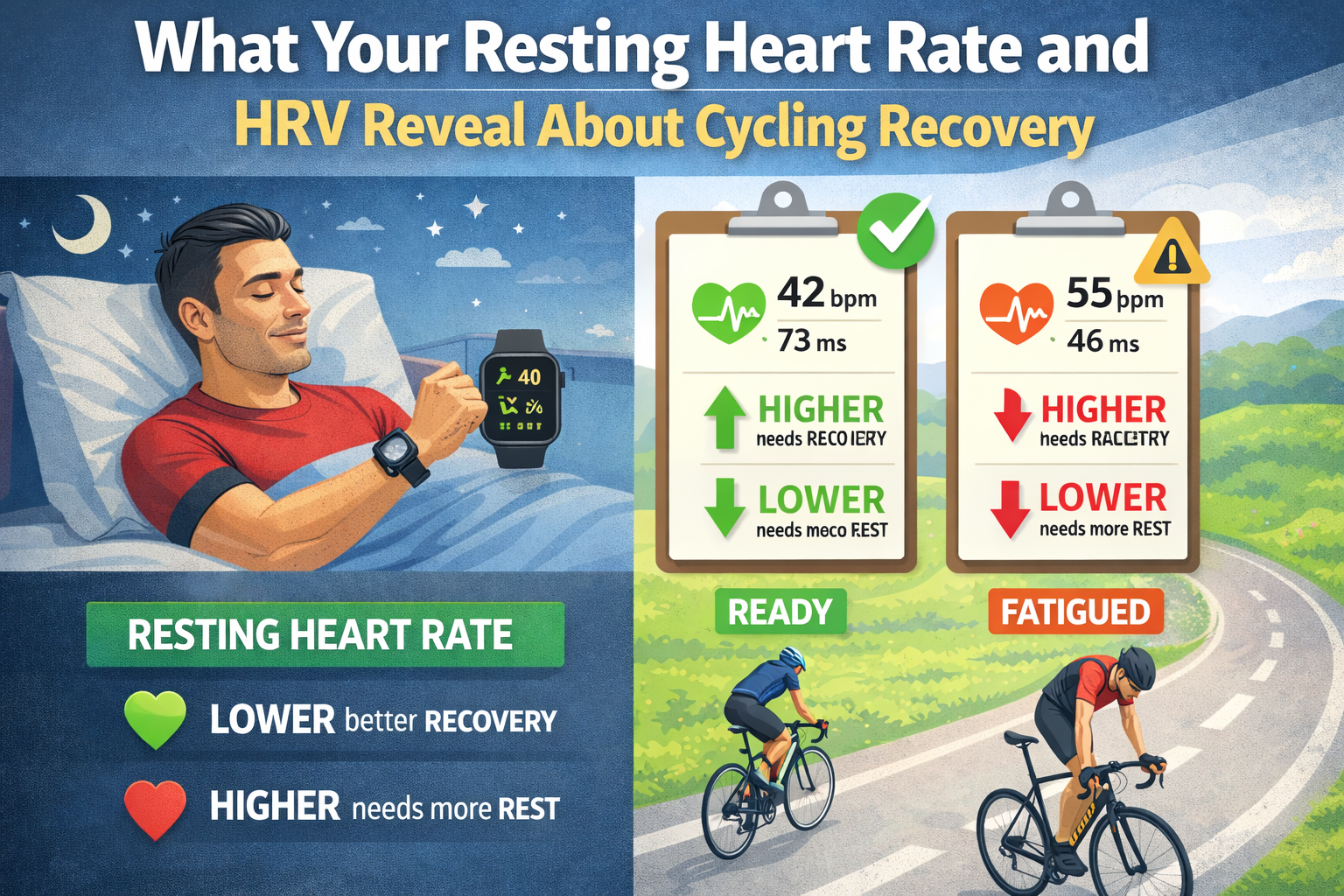
What Your Resting Heart Rate and HRV Reveal About Cycling Recovery
More Details: What Your Resting Heart Rate and HRV Reveal About Cycling RecoveryEvery night while you sleep, your Apple Watch is quietly collecting the two most powerful recovery metrics in endurance sports – and every morning, you’re probably ignoring both of them. Your resting heart rate and heart rate variability don’t just tell you how your heart is doing in some vague, general-health sense. They tell you…
-
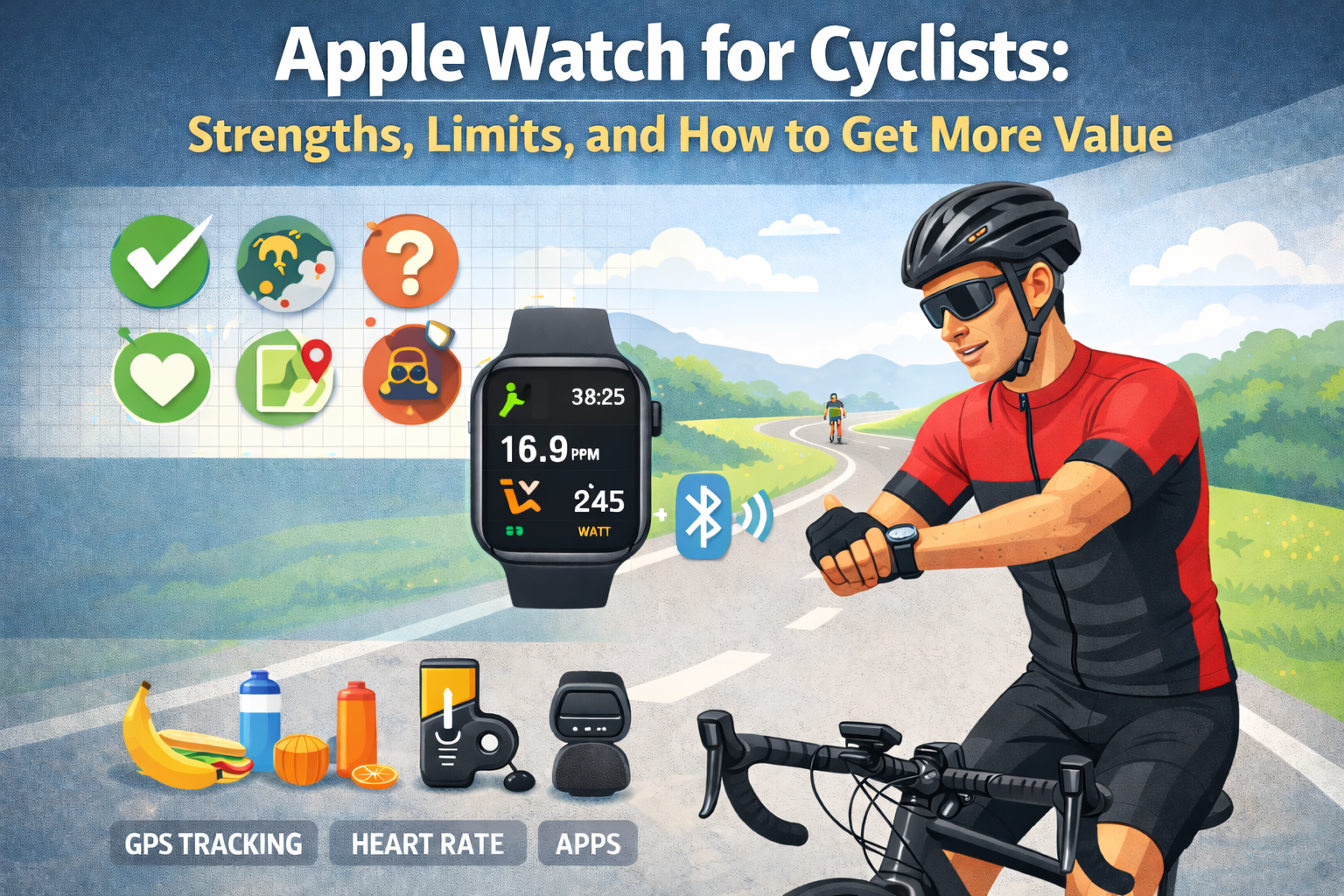
Apple Watch for Cyclists: Strengths, Limits, and How to Get More Value
More Details: Apple Watch for Cyclists: Strengths, Limits, and How to Get More ValueYou strapped on your Apple Watch, hit “Outdoor Cycle,” and rode for an hour. Now you’re staring at a summary screen showing average heart rate, distance, calories, and maybe a VO₂max update. That’s genuinely useful data. But it’s also about 30% of the story your Apple Watch actually captured – and roughly 10% of the…
-
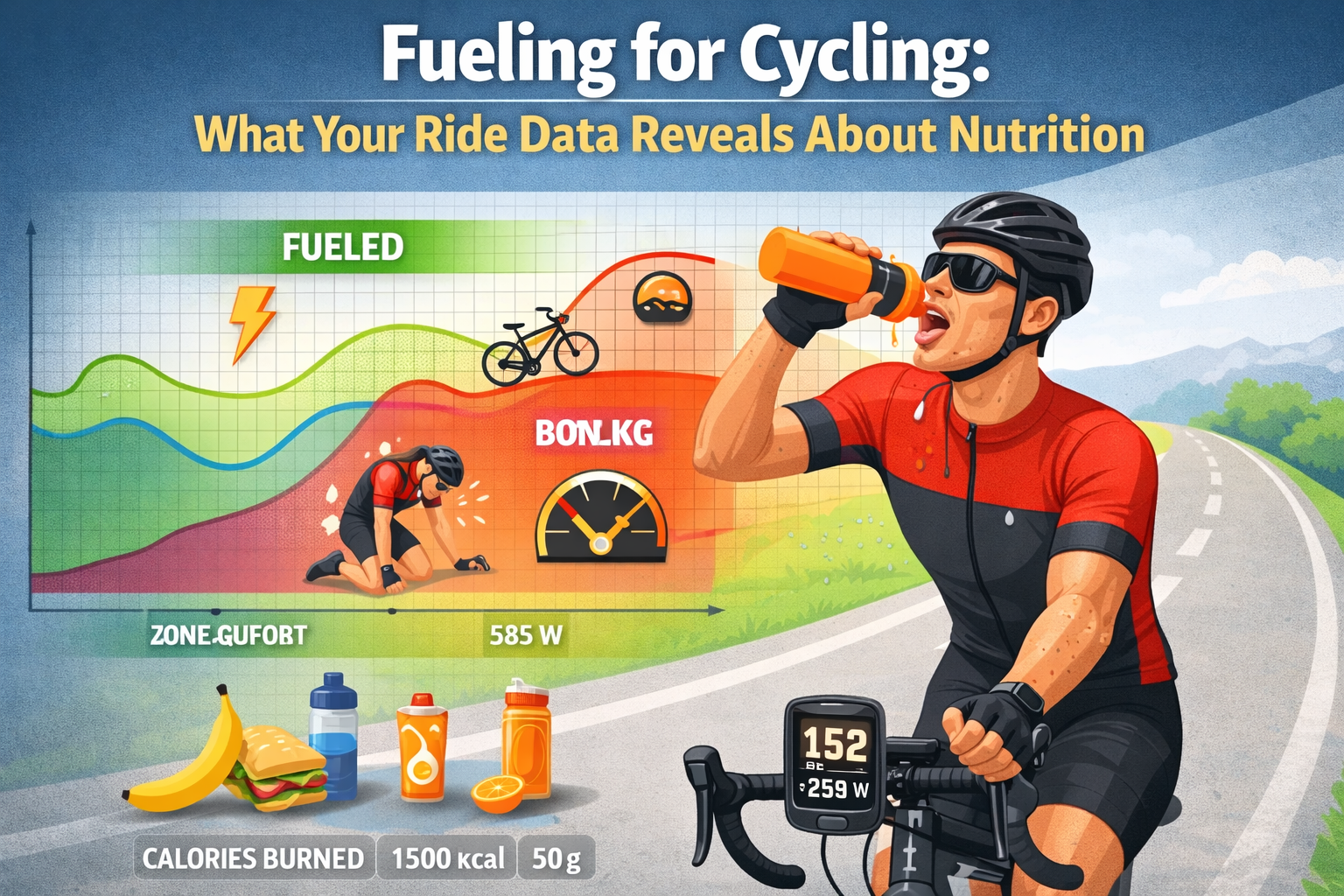
Fueling for Cycling: What Your Ride Data Reveals About Nutrition
More Details: Fueling for Cycling: What Your Ride Data Reveals About NutritionYou’ve seen it in your numbers. Maybe you didn’t recognize it at the time. The first two hours felt great. Heart rate stable. Speed consistent. Efficiency factor right where it should be. Then, somewhere in hour three, everything changed. Speed dropped. Heart rate dropped with it – not because you were going easy, but because…
-

Pacing Strategy for Cycling: What Your Heart Rate Data Teaches You
More Details: Pacing Strategy for Cycling: What Your Heart Rate Data Teaches YouYou start a ride feeling fresh. Legs are strong. Motivation is high. So you push – maybe a little harder than planned, but it feels good. Thirty minutes later, that “good” feeling fades. An hour in, you’re struggling to maintain pace. By the final third of the ride, you’re grinding through every pedal stroke, watching…
-

Indoor vs. Outdoor Cycling: Why Your Metrics Don’t Match (And How to Compare Them)
More Details: Indoor vs. Outdoor Cycling: Why Your Metrics Don’t Match (And How to Compare Them)You’ve experienced it. Everyone who trains indoors has. Outside, you cruise at 28 km/h with a heart rate of 145 bpm. It feels sustainable. You could ride for hours. Inside, on the trainer, you’re grinding away at what should be the same effort. Your heart rate reads 145 bpm. But your power output is lower.…
-
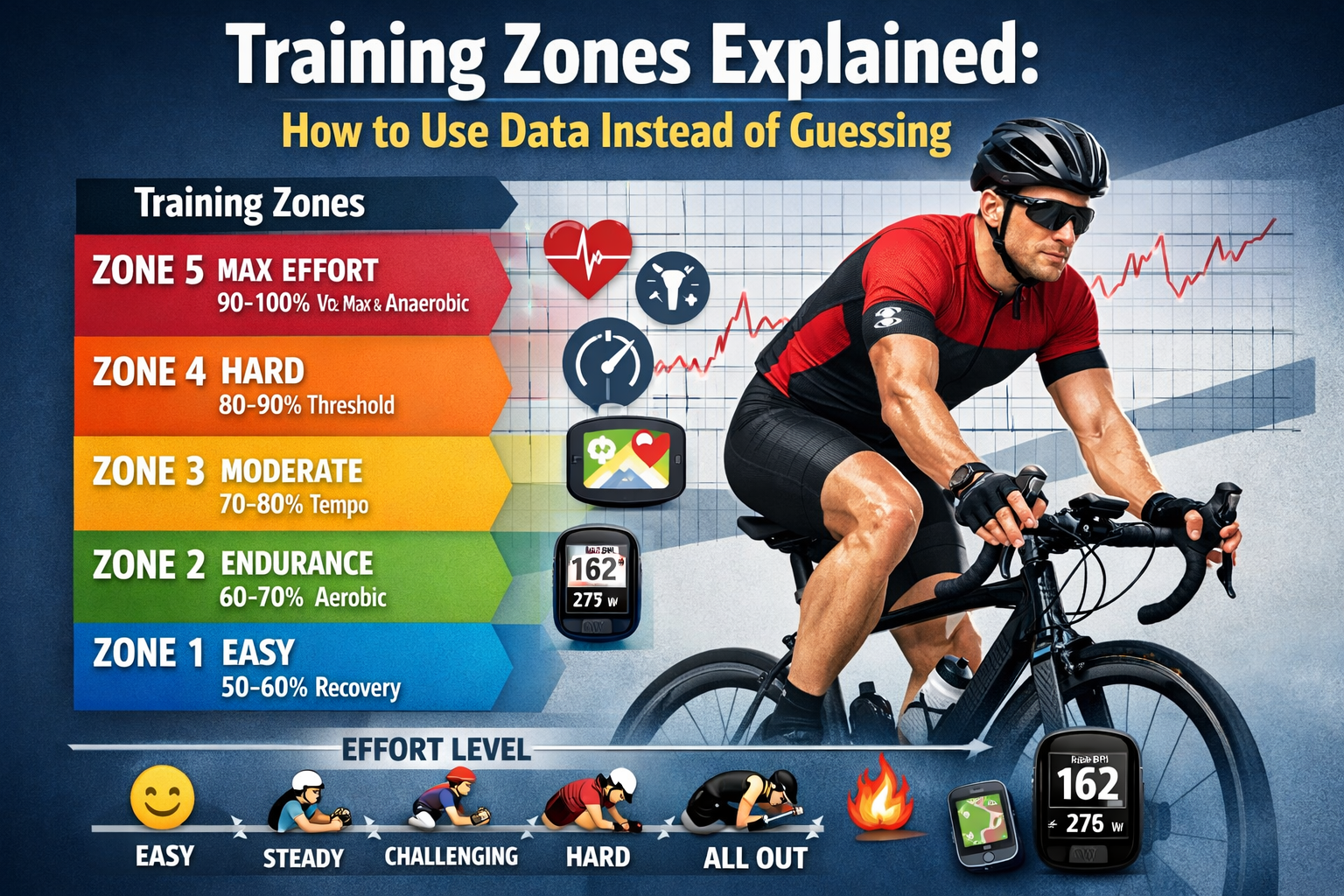
Training Zones Explained: How to Use Data Instead of Guessing
More Details: Training Zones Explained: How to Use Data Instead of GuessingEvery cycling training plan uses zones. Zone 2 for base building. Zone 4 for threshold work. Zone 5 for VO2max intervals. But here’s the uncomfortable question: how do you know your zones are correct? If you set your heart rate zones using the “220 minus age” formula, there’s a good chance they’re wrong – potentially…
-
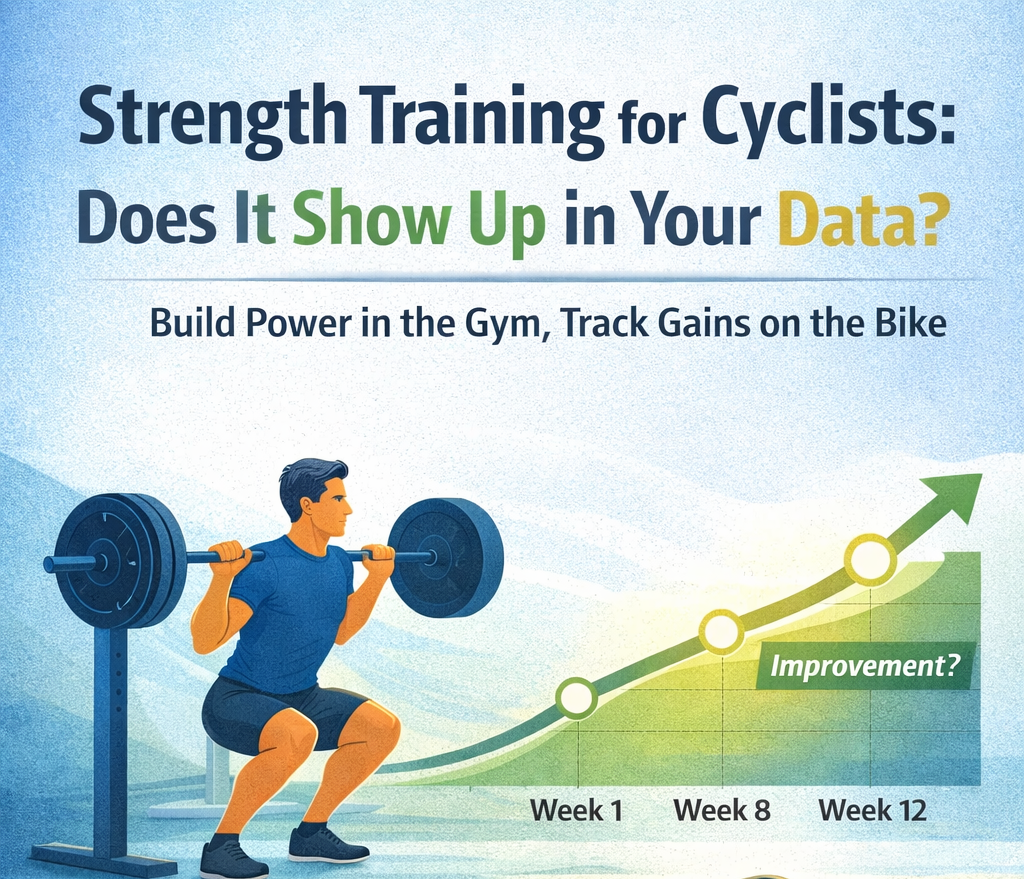
Strength Training for Cyclists: Does It Show Up in Your Data?
More Details: Strength Training for Cyclists: Does It Show Up in Your Data?You’ve heard the advice: strength training makes you a better cyclist. Stronger legs, more power, better endurance, fewer injuries. So you start squatting. Deadlifting. Doing lunges until your legs burn. Six weeks later, you’re wondering: is any of this actually helping my cycling? Your weight might be up slightly (muscle mass). Your legs feel more…
-
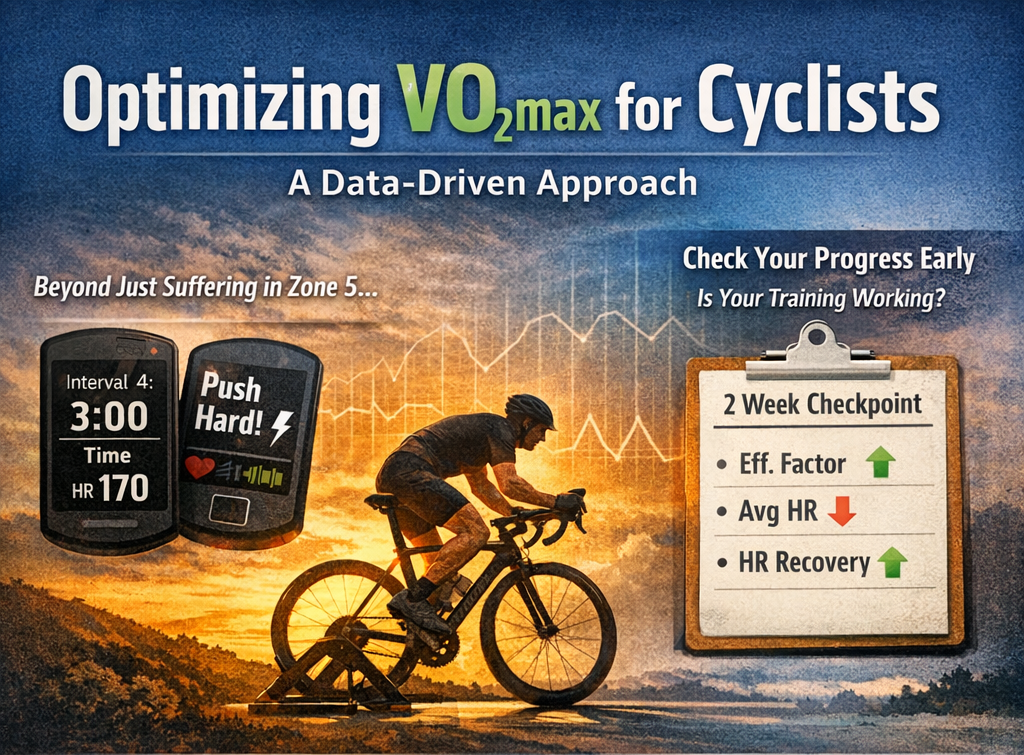
How to Increase Your Cycling VO2max: A Data-Driven Protocol
More Details: How to Increase Your Cycling VO2max: A Data-Driven ProtocolSearch “how to improve VO2max” and you’ll find the same advice everywhere: do high-intensity intervals, push into zone 5, suffer for 4-6 weeks, repeat. That advice isn’t wrong. It’s incomplete. What’s missing: how to know if it’s actually working – and when to adjust before you waste weeks on a protocol that isn’t producing adaptation.…
-
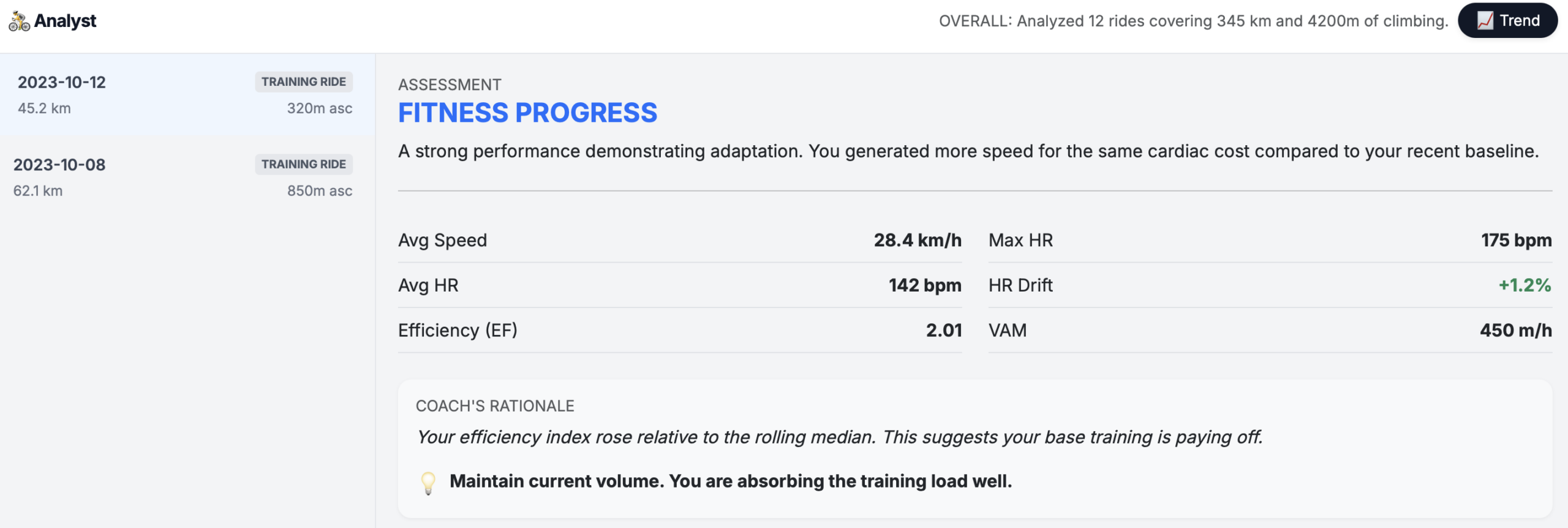
How to Interpret Apple Watch Cycling Metrics: A Complete Guide to Meaningful Analysis
More Details: How to Interpret Apple Watch Cycling Metrics: A Complete Guide to Meaningful AnalysisYou finished a ride, glanced at your Apple Watch, and saw: 142 bpm average heart rate, 28.4 km/h average speed.Good? Bad? Improving? The honest answer: you can’t tell from those numbers alone.Raw cycling metrics from your Apple Watch are snapshots without context. A 142 bpm heart rate means something entirely different on a flat road…